Maturity-onset diabetes of the young (MODY)
Log in to starLast updated 4mo ago
Log in to add personal notes on this page.
A thin 18-year-old is diagnosed with diabetes without ketosis. He has negative islet autoantibodies. His mother and grandfather both developed diabetes before age 25.
AD; various genes
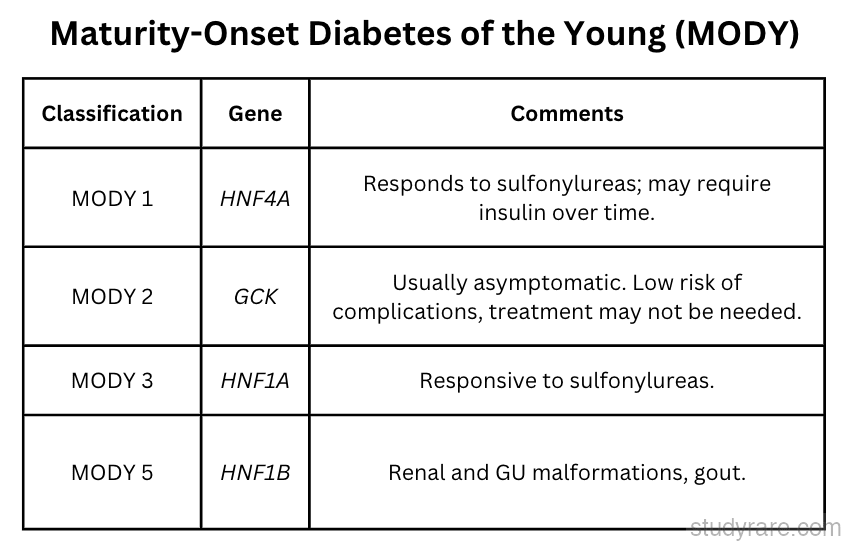
- MODY 1: HNF4A
- MODY 2: GCK (glucokinase) - mild fasting hyperglycemia, no treatment needed
- MODY 3: HNF1A - most common, sulfonylurea-responsive
- Non-insulin dependent diabetes, onset <25 years
- Autosomal dominant family history
- Non-obese
- Negative islet autoantibodies
- Suspect in young-onset (<25 y), non-obese, antibody-negative diabetes with a multigenerational autosomal dominant family history
- Negative islet autoantibodies and detectable C-peptide help exclude type 1 diabetes
- Confirm with molecular genetic testing (multigene MODY panel); the specific gene directs treatment
- GCK (MODY 2): mild, stable, nonprogressive fasting hyperglycemia; usually requires no treatment outside pregnancy
- HNF1A (MODY 3) and HNF4A (MODY 1): highly sensitive to low-dose sulfonylureas, often allowing transition off insulin
- HNF1B (MODY 5): associated with renal cysts and genitourinary malformations; monitor renal function
- Cascade genetic testing of at-risk relatives, since a precise diagnosis changes treatment
"DOM is MOD backward": MODY is "Otosomal DOMynant": DOM is MOD spelled backward, reminding you of autosomal dominant inheritance. Patients are not obese (vs. type 2 diabetes). Think "ChiraG MODY": Chirag is thin, just like MODY patients, and the "G" reminds you of Glucokinase (GCK, MODY 2).
This table summarizes the major MODY subtypes, their causative genes, and distinguishing clinical features.