Log in to add personal notes on this page.
A newborn fails the red reflex test. Ophthalmology exam reveals bilateral white opacities in the lens. The baby is otherwise healthy with normal growth.
Heterogeneous
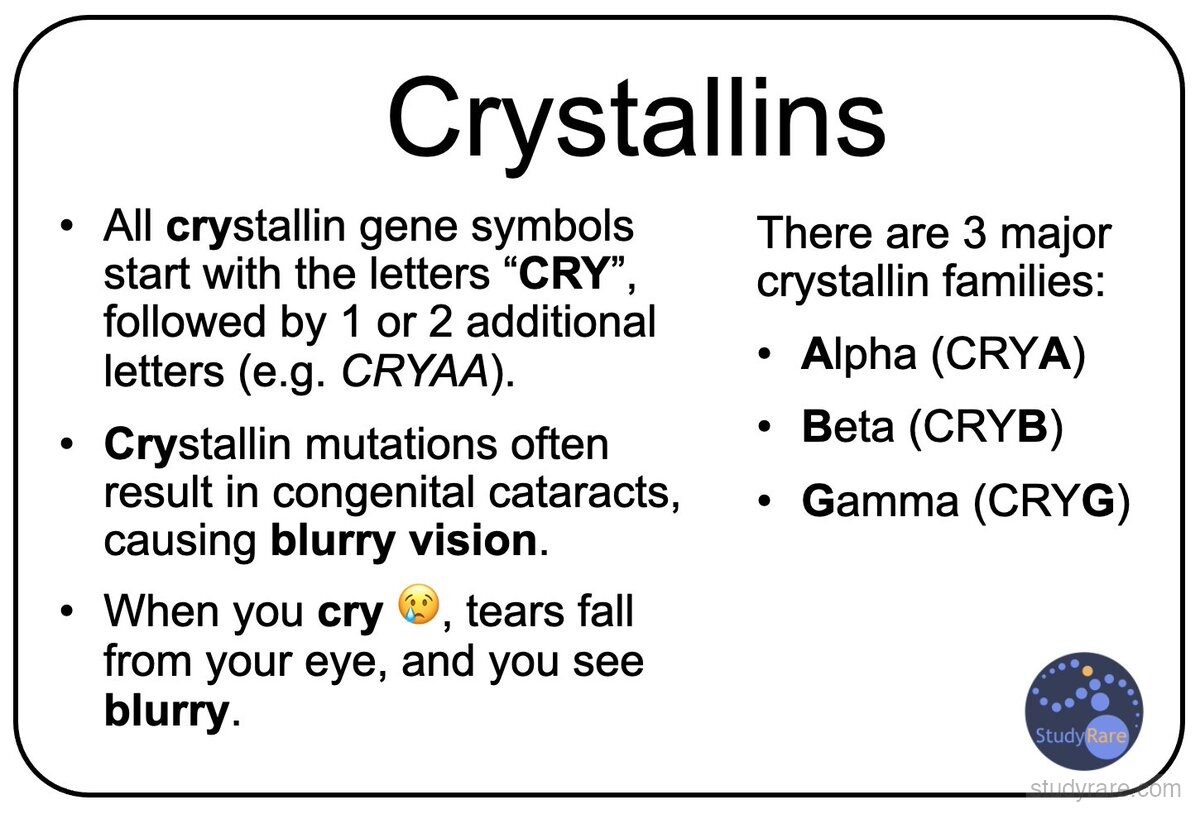
- AD most common for isolated: CRYAA, CRYAB, CRYBB2, etc. (crystallin genes)
- Syndromic: galactosemia, congenital rubella, Lowe syndrome, others
- White pupil (leukocoria) or absent red reflex
- May cause deprivation amblyopia if untreated
- Always evaluate for syndromic causes (metabolic, infectious, chromosomal)
- Red-reflex screening at newborn and well-child exams; an absent or abnormal reflex prompts urgent ophthalmology referral
- Dilated slit-lamp and fundus exam to characterize the opacity and rule out associated ocular anomalies
- Etiologic workup for bilateral or syndromic cases: metabolic studies (galactosemia), TORCH infection screen, and consider chromosomal or gene-panel testing
- Early surgical removal of visually significant cataracts to prevent deprivation amblyopia, followed by optical correction and amblyopia therapy
- Treat the underlying cause when identified (for example, galactose-restricted diet in galactosemia)
- Long-term ophthalmologic follow-up and genetic counseling for heritable forms
All crystallin gene symbols start with "CRY": when you cry, tears fall from your eye and you see blurry, linking crystallin mutations to congenital cataracts.