
Eye Disorders
9 conditions|2 on ABGC's list
Overview
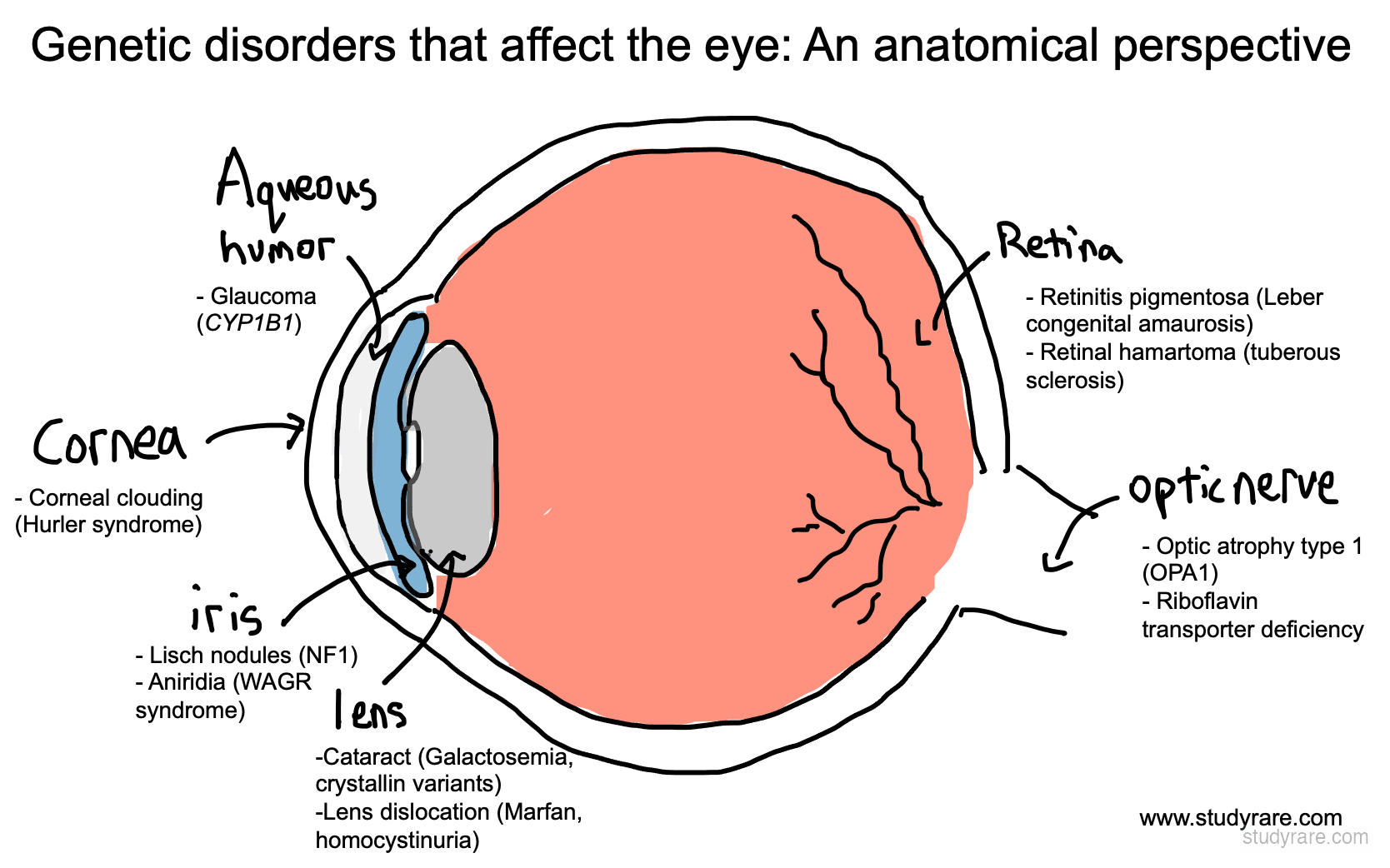
Genetic eye disorders range from isolated conditions (color blindness) to syndromic presentations (retinoblastoma in cancer predisposition). Understanding inheritance patterns is key - many are X-linked.
Retinal dystrophies
Inherited degenerations of the photoreceptors and retinal pigment epithelium. The two prototypes are clinically distinct:
- Retinitis pigmentosa (RP): a rod-cone dystrophy. Symptoms start with night blindness and peripheral field loss ("tunnel vision"); fundus shows the classic triad of bone-spicule pigmentation, attenuated vessels, waxy-pale disc. Extremely heterogeneous: >80 genes spanning AD (RHO), AR (USH2A, RPE65), and X-linked (RPGR, RP2) inheritance. USH2A pleiotropy: the same variants can cause non-syndromic RP or Usher syndrome type 2 (RP + congenital hearing loss); audiology is mandatory at diagnosis.
- Stargardt disease: a macular dystrophy presenting in childhood/adolescence with central vision loss; fundus shows pisciform yellow-white flecks and a "beaten-bronze" macula, with the diagnostic dark choroid sign on FA. Almost always AR ABCA4; rare AD forms (ELOVL4, PROM1).
Two molecular-diagnosis-driven counseling pearls: avoid high-dose vitamin A in ABCA4 Stargardt (accelerates lipofuscin accumulation), and biallelic RPE65 disease is now treatable with subretinal AAV gene therapy (voretigene neparvovec / Luxturna). Genotype matters.
Summary Table
| Disorder | Gene | Inheritance | Cardinal Features |
|---|---|---|---|
| LCA | Multiple (RPE65) | AR | Blindness from infancy, nystagmus, ERG absent |
| LHON | mtDNA | Maternal | Acute sequential vision loss, young males |
| Retinitis pigmentosa | RHO, USH2A, others | AD/AR/XLR | Nyctalopia, peripheral field loss, bone-spicule pigment |
| Stargardt | ABCA4 | AR | Juvenile macular dystrophy, dark choroid sign; avoid vit A |
| Retinoblastoma | RB1 | AD/sporadic | Leukocoria, tumor suppressor, second cancers |
| Color blindness | OPN1 genes | XLR | Red-green deficiency, very common |
| Oculocutaneous albinism | TYR, OCA2, others | AR | Pale skin/hair, nystagmus, foveal hypoplasia |
| Congenital cataracts | Crystallins, syndromic | Variable | Leukocoria, absent red reflex, amblyopia risk |
| BPES | FOXL2 | AD | Narrow palpebral fissures, ptosis, ± POI (type I) |