Log in to add personal notes on this page.
A 10-year-old boy has recurrent kidney stones. Stone analysis reveals cystine. Urine amino acid analysis shows elevated cystine, ornithine, lysine, and arginine.
AR; SLC3A1 (type A) or SLC7A9 (type B)
- Defective renal/intestinal dibasic amino acid transporter
- Cystine kidney stones (hexagonal crystals)
- Elevated urinary cystine, ornithine, lysine, arginine ("COLA")
- Recurrent nephrolithiasis from childhood
- Stone analysis showing cystine composition
- Hexagonal cystine crystals on urine microscopy
- Positive urine cyanide-nitroprusside (sodium nitroprusside) test screens for cystine
- Quantitative 24-hour urine cystine confirms; SLC3A1/SLC7A9 testing clarifies type
- High fluid intake, urine alkalinization, cystine-binding drugs (tiopronin, D-penicillamine)
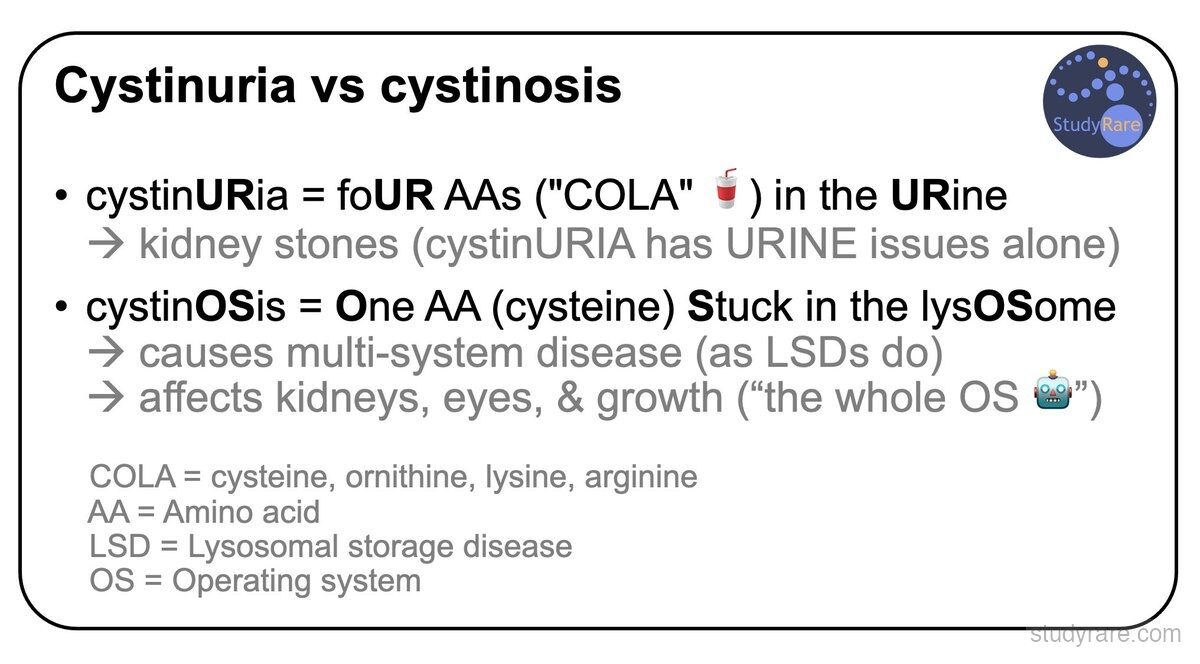
"COLA in the URine": CystinURia = foUR AAs in the URine: Cystine, Ornithine, Lysine, Arginine (COLA). CystinURIA has urine issues alone (kidney stones), unlike cystinOSis which affects the whole body. "Systinuria = SLC Seven": the gene SLC7A9.
This comparison highlights the key differences: cystinURia involves four amino acids (COLA) in the urine causing kidney stones, while cystinOSis involves one amino acid stuck in the lysOSome causing multi-system disease.