
Dopa-responsive dystonia (Segawa syndrome)
Log in to starLast updated 4mo ago
A 6-year-old girl develops progressive gait difficulty with foot dystonia that worsens throughout the day and improves with sleep. Her symptoms dramatically resolve with low-dose levodopa. Her mother recalls similar childhood symptoms that were misdiagnosed as cerebral palsy.
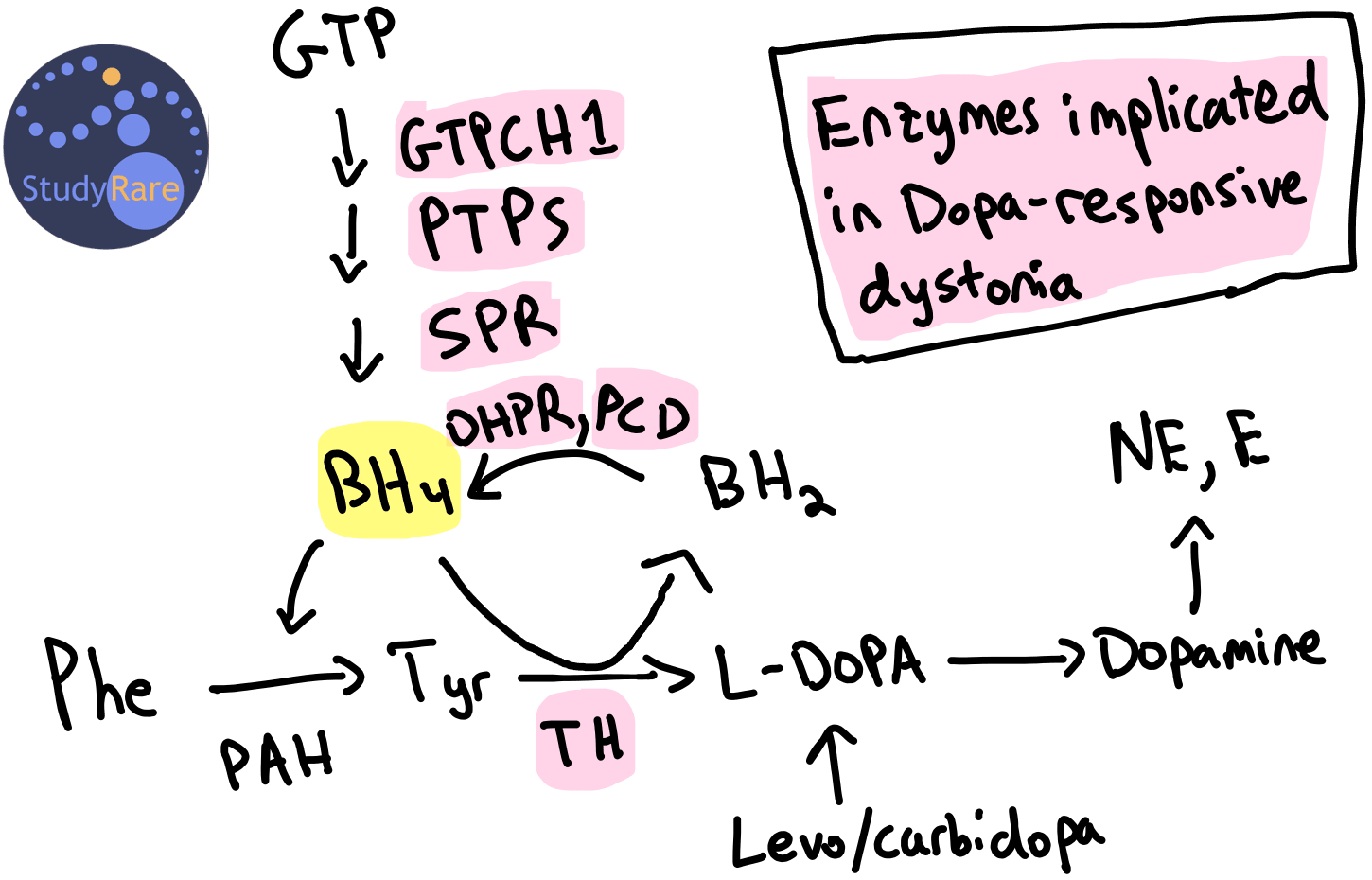
AD; GCH1 (GTP cyclohydrolase 1): most common form
- GCH1 is the rate-limiting enzyme in tetrahydrobiopterin (BH4) synthesis
- BH4 is a cofactor for tyrosine hydroxylase (dopamine synthesis) and phenylalanine hydroxylase
- Reduced penetrance, especially in males (~2-5x more common in females)
- AR form: TH (tyrosine hydroxylase); more severe
- Childhood-onset dystonia (typically lower limbs first)
- Diurnal fluctuation: symptoms worsen as the day progresses, improve with sleep (hallmark)
- Dramatic and sustained response to low-dose levodopa (diagnostic and therapeutic)
- Female predominance (AD form)
- Often misdiagnosed as cerebral palsy or spastic diplegia
- Normal brain MRI (unlike other causes of dystonia)
- Trial of low-dose levodopa (dramatic response is essentially diagnostic)
- GCH1 gene testing
- CSF neurotransmitter analysis (low HVA, normal 5-HIAA)
- Phenylalanine loading test may be abnormal (shared BH4 pathway with PKU)
- Low-dose levodopa/carbidopa: lifelong, with sustained benefit and no tolerance
- Most patients achieve near-normal function on treatment
"DOPAmine Responsive Dystonia": DRD is one of the few neurological conditions with a truly dramatic treatment response. If a child with dystonia gets better with sleep and responds to levodopa, it's DRD until proven otherwise.
Diurnal = DRD: both start with "D." The diurnal fluctuation (worse at end of day, better after sleep) is the clinical hallmark.
GTP cyclo hydrolase = cyclical symptoms: the "cyclo" in the enzyme name cues the cyclical (diurnal) pattern that defines DRD.