Gorlin syndrome (nevoid basal cell carcinoma)
Log in to starLast updated 3mo ago
A child with macrocephaly has palmar pits and odontogenic keratocysts of the jaw. He later develops multiple basal cell carcinomas as a teenager.
AD. PTCH1 (patched 1) is the most common gene, followed by SUFU (suppressor of fused). Both act in the Hedgehog signaling pathway.
Established clinical diagnostic criteria sort these into major and minor features:
Major:
- Multiple basal cell carcinomas (often before age 20)
- Odontogenic keratocysts of the jaw
- Palmar/plantar pits
- Calcification of the falx cerebri
- First-degree relative with the syndrome
Minor:
- Rib anomalies (bifid, fused, or splayed ribs)
- Macrocephaly
- Medulloblastoma in childhood (higher risk with SUFU)
- Ovarian or cardiac fibromas
- Clinical diagnostic criteria include 2 major, or 1 major plus 2 minor of the features above
- Dental X-rays for jaw keratocysts and skull imaging for falx calcification
- Germline molecular sequencing of PTCH1 and SUFU
- Avoid radiation (causes more BCCs)
- Dermatologic surveillance
- Vismodegib (Hedgehog inhibitor) for advanced BCC
A Garmin GPS (Gorlin sounds like "Garmin"): picture a hiker navigating by a handheld GPS, staying in the shade so the sun never reaches the skin (UV and radiation avoidance, since radiation drives basal cell carcinomas). He holds the GPS in a palm dotted with pits (palmar pits; also plantar pits on the soles).
GPS = Gorlin, PTCH1, SUFU.
SUFU = extra SUrveillance: of the two genes, SUFU carries the higher childhood medulloblastoma risk.
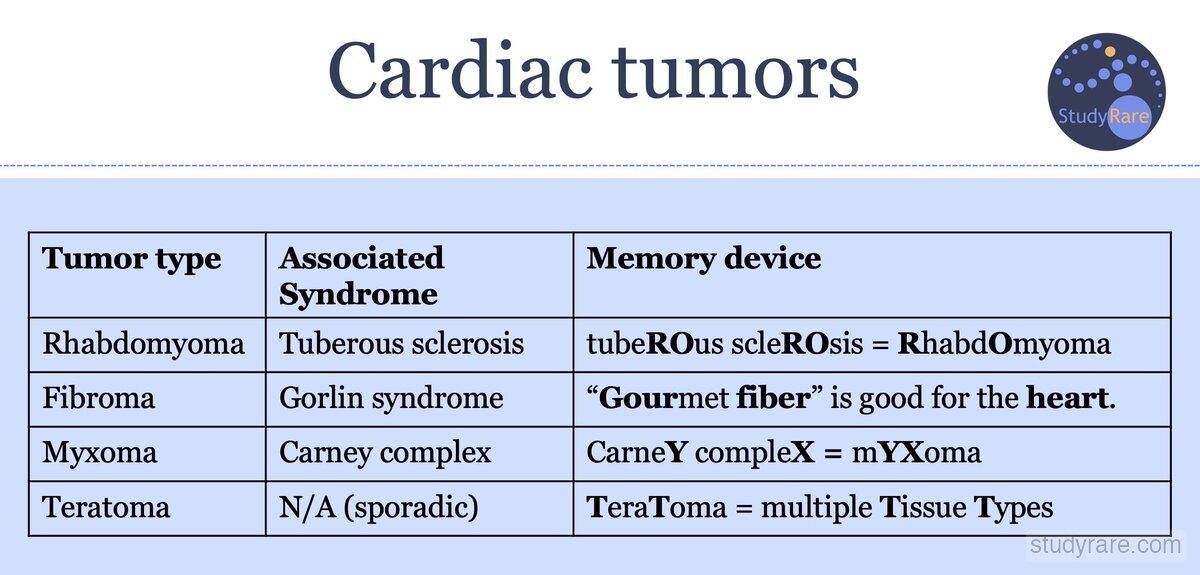
This table links cardiac tumor types to their associated genetic syndromes; cardiac fibromas are associated with Gorlin syndrome ("Gourmet fiber is good for the heart").