
Hereditary breast and ovarian cancer (BRCA1/2)
On ABGC's listListed on the ABGC Self-Study GuideLog in to starLast updated 4mo ago
A 38-year-old woman is diagnosed with triple-negative breast cancer. Her mother died of ovarian cancer at age 52, and her maternal aunt had breast cancer at 45. Genetic testing reveals a BRCA1 pathogenic variant.
AD
- BRCA1 (17q21): DNA repair, homologous recombination
- BRCA2 (13q13): DNA repair, homologous recombination
- Founder variants in Ashkenazi Jewish population
Cancer Risks (approximate lifetime):
| Cancer | BRCA1 | BRCA2 |
|---|---|---|
| Breast (female) | 55-72% | 45-69% |
| Ovarian | 39-44% | 11-17% |
| Breast (male) | 1-2% | 6-8% |
| Prostate | Increased | 20-25% |
| Pancreatic | Increased | 5-10% |
- Early-onset breast cancer
- Triple-negative breast cancer (especially BRCA1)
- Bilateral breast cancer
- Both breast and ovarian cancer
- Male breast cancer (especially BRCA2)
- Confirmed by germline testing identifying a pathogenic BRCA1 or BRCA2 variant; multigene panels are now standard since other genes (e.g., PALB2, CHEK2, ATM) overlap clinically
- Testing is indicated for early-onset, triple-negative, bilateral, or male breast cancer, a personal or family history of ovarian cancer, or a known familial variant
- In Ashkenazi Jewish individuals, founder-variant testing (two BRCA1 and one BRCA2 variants) may precede full-gene analysis
- A negative result is most informative when a specific familial pathogenic variant is already known (true-negative cascade testing)
- Enhanced surveillance (MRI + mammogram starting age 25-30)
- Risk-reducing mastectomy
- Risk-reducing salpingo-oophorectomy (RRSO) at 35-40 (BRCA1) or 40-45 (BRCA2)
- PARP inhibitors for treatment
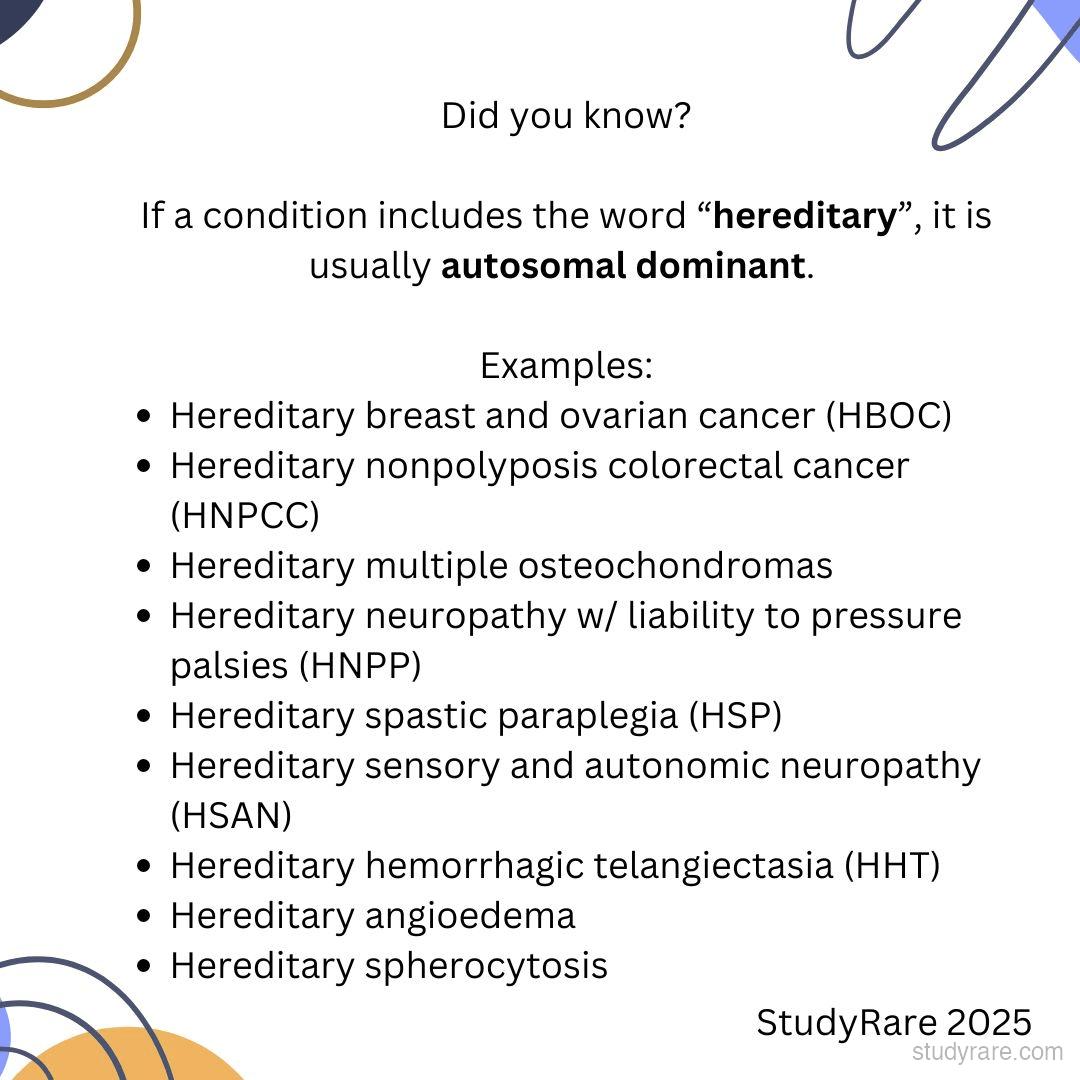
Conditions with "hereditary" in the name are usually autosomal dominant.
BRCA1 = "BOPP": Breast, Ovarian, Prostate, Pancreatic cancer. On chromosome 17. Involved in dsDNA break repair.
BRCA2 = "M-BOPP": Same cancers as BRCA1 plus Melanoma. On chromosome 13. BRCA2 confers more risk for male breast and prostate cancer compared with BRCA1.
"Anything starting with BR is associated with BReast cancer": BRCA1, BRCA2, BRIP1 all start with "BR" and all increase breast cancer risk.
AR BRCA variants cause Fanconi anemia: Heterozygous BRCA1/2 variants cause cancer predisposition (AD), while biallelic BRCA variants cause Fanconi anemia (AR).