
Hereditary hemorrhagic telangiectasia (HHT/Osler-Weber-Rendu)
Log in to starLast updated 4mo ago
Log in to add personal notes on this page.
A patient with recurrent epistaxis has mucocutaneous telangiectasias on lips and fingers. CT reveals pulmonary AVMs.
AD; ENG (HHT1), ACVRL1/ALK1 (HHT2), SMAD4 (JP-HHT)
- Mucocutaneous telangiectasias (lips, tongue, fingers)
- Recurrent epistaxis
- Visceral AVMs: pulmonary, hepatic, cerebral, GI
- SMAD4: overlap with juvenile polyposis
Complications:
- Pulmonary AVMs → stroke, brain abscess (paradoxical emboli)
- GI bleeding
- High-output heart failure (hepatic AVMs)
- Clinical diagnosis by Curaçao criteria (definite if ≥3 of 4): recurrent spontaneous epistaxis, mucocutaneous telangiectasias, visceral AVMs (pulmonary, hepatic, cerebral, GI), and a first-degree relative with HHT
- Genetic testing (ENG, ACVRL1, SMAD4) confirms the diagnosis and enables cascade screening of at-risk relatives
- Screening for occult AVMs: contrast echocardiography (bubble study) for pulmonary AVMs, MRI for cerebral AVMs; consider SMAD4 testing for combined juvenile polyposis-HHT (adds GI/colon surveillance)
- Embolization of pulmonary AVMs to prevent paradoxical embolic stroke and brain abscess; antibiotic prophylaxis for dental/surgical procedures in patients with pulmonary AVMs
- Epistaxis: humidification and topical measures first-line; antifibrinolytics (tranexamic acid) and bevacizumab for refractory bleeding
- Iron supplementation/transfusion for chronic blood-loss anemia
- Cerebral AVMs managed individually (embolization, surgery, or radiosurgery) by a multidisciplinary team
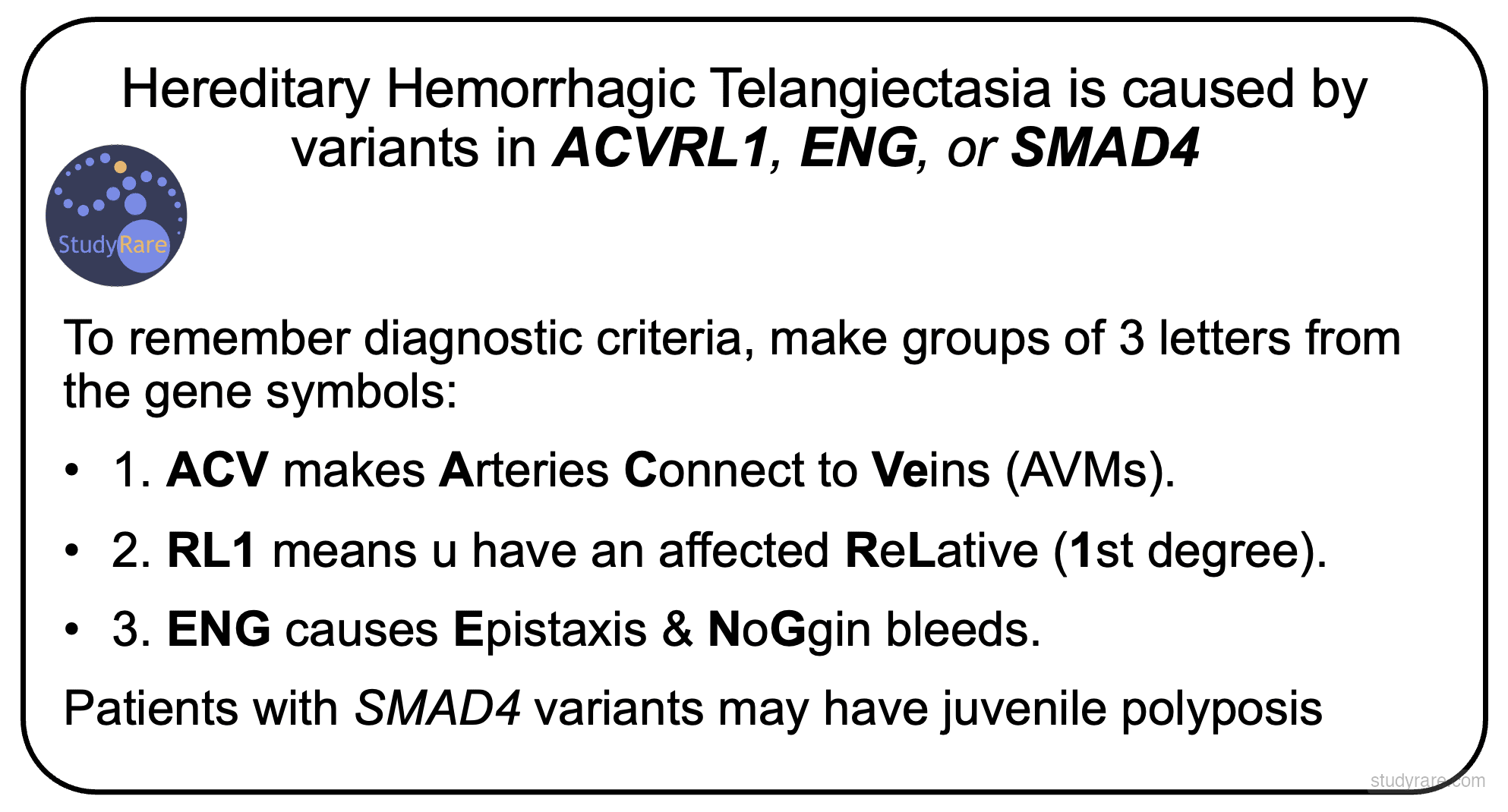
Genes from diagnostic criteria: Make groups of 3 letters from the gene names ACVRL1 and ENG:
- ACV = Arteries Connect to Veins (AVMs)
- RL1 = you have an affected ReLative (1st degree relative, a diagnostic criterion)
- ENG = Epistaxis & NoGgin bleeds
Sturge-Weber vs HHT: Sturge-Weber has 1 gene (GNAQ), 1 place on body, and 1 dash in the name. HHT (Osler-Weber-Rendu) has 2 dashes, multiple genes, and multiple places on the body