Last updated 4mo ago
Log in to add personal notes on this page.
A 40-year-old man develops involuntary choreiform movements, personality changes, and progressive cognitive decline. His father died in a psychiatric facility at age 50 with similar symptoms.
AD; CAG repeat expansion in HTT
- Normal: ≤26 repeats
- Intermediate (mutable normal): 27-35 (not disease-causing in carrier, but unstable and may expand in offspring)
- Reduced penetrance: 36-39
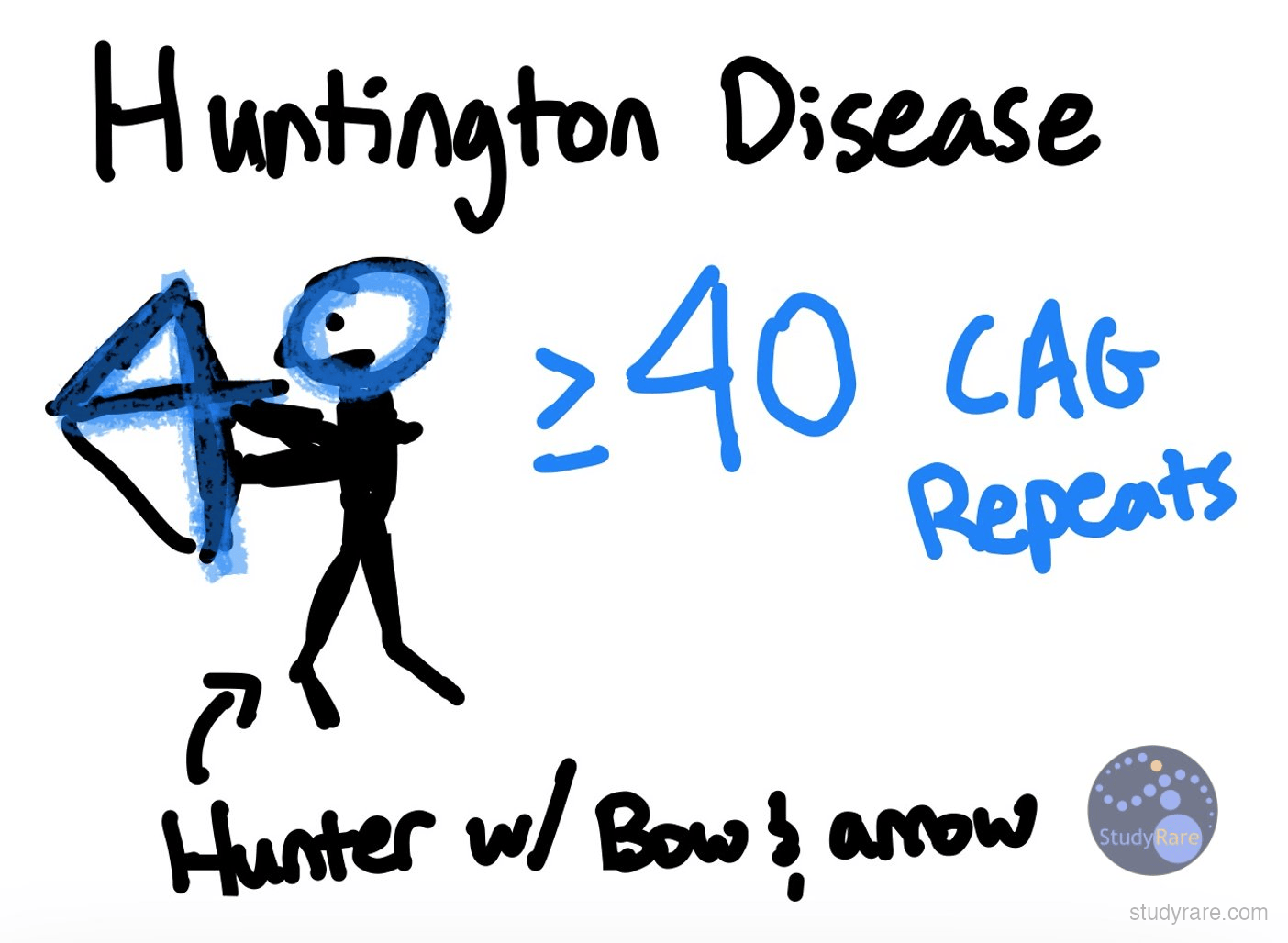
- Full penetrance: ≥40
- Chorea (involuntary, dance-like movements)
- Psychiatric symptoms (depression, psychosis, behavioral)
- Cognitive decline → dementia
- Juvenile HD (<20 years): often paternal, more CAG repeats, rigidity > chorea
- HD vs Alzheimer's vs Parkinson's: HD = chorea (involuntary, dance-like movements). Alzheimer's = memory loss. Parkinson's = rigidity and resting hand tremor.
Anticipation: Especially paternal transmission: CAG repeat expansion preferentially occurs during spermatogenesis (vs DM1 where congenital form is almost always maternal)
- HD gene testing (repeat sizing)
- No disease-modifying therapy; symptomatic and multidisciplinary supportive care
- VMAT2 inhibitors (tetrabenazine, deutetrabenazine) for disabling chorea; treat depression, psychosis, and suicidality
- Nutritional support for weight loss/dysphagia; PT/OT and fall prevention as mobility declines
- Predictive testing of at-risk adults follows a formal protocol with pre- and post-test genetic counseling; reproductive options include prenatal and preimplantation testing
The "Hunter with Bow and arrow" mnemonic ties the disease name to the key diagnostic threshold of 40 or more CAG repeats for full penetrance.