Metachromatic leukodystrophy (MLD)
Log in to starLast updated 4mo ago
Log in to add personal notes on this page.
A toddler who was walking normally begins to fall frequently. He develops progressive spasticity, peripheral neuropathy, and cognitive decline.
AR; ARSA (arylsulfatase A)
- White matter disease + peripheral neuropathy
- Late infantile (most common): Regression after 1-2 years of normal development
- Juvenile: School-age onset, behavioral changes
- Adult: Psychiatric symptoms, dementia
- Metachromatic granules in tissues
- Reduced arylsulfatase A enzyme activity (leukocytes/fibroblasts) plus elevated urinary sulfatides
- Pseudodeficiency alleles cause low enzyme without disease: confirm with sulfatide excretion and molecular testing
- Confirmation: ARSA molecular testing; brain MRI shows symmetric periventricular demyelination
- HSCT, gene therapy (arsa-cel approved)
"MiCheLe is a SASsy GAL": the biochemical pathway: Sulfatide is converted by ArylSulfatase A to GALactosylceramide. "MCL" = MiCheLe.
ML = Myelin, Muscle wasting: MLD causes deMyelination and muscLe wasting. "Metachromatic" refers to how sulfatide granules stain under the microscope. "Leuko" = white matter disease.
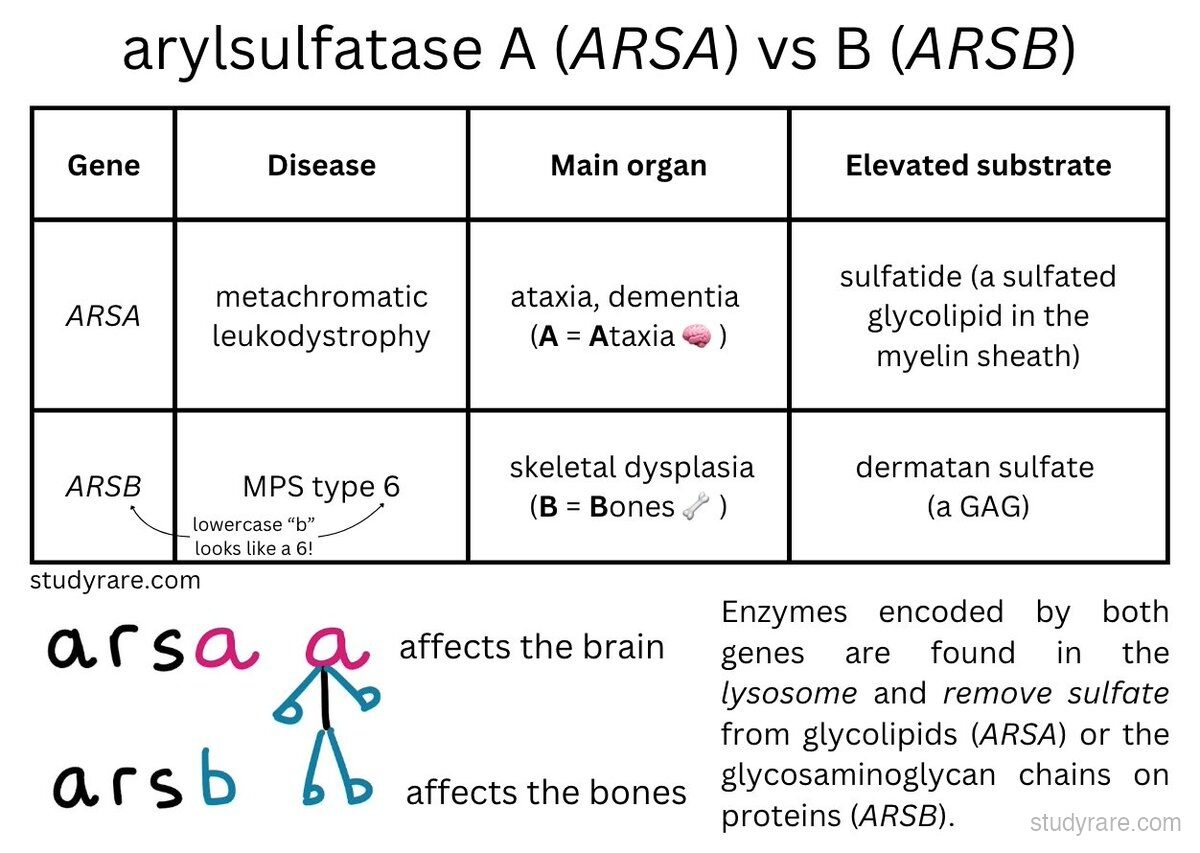
This comparison table distinguishes ARSA (arylsulfatase A, causing MLD, which affects the brain) from ARSB (arylsulfatase B, causing MPS type 6, which affects the bones), with memory devices linking the lowercase letter to the target organ.