Last updated 4mo ago
A child with bilateral sensorineural hearing loss is found to have enlarged vestibular aqueducts on CT imaging. Thyroid function is normal in childhood, but a perchlorate discharge test is abnormal.
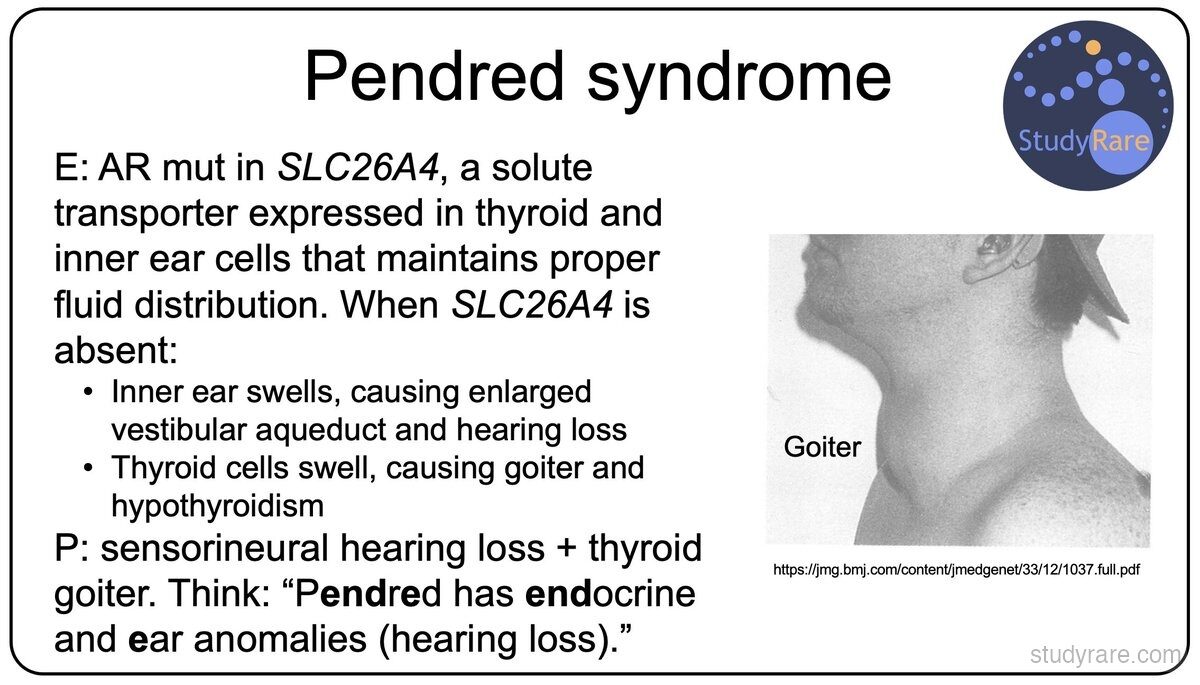
AR; SLC26A4 (pendrin)
- Sensorineural hearing loss (bilateral, severe to profound)
- Enlarged vestibular aqueduct (EVA) on temporal bone imaging
- Goiter (develops in ~50%, usually after first decade)
- Euthyroid or subclinical hypothyroidism
- Positive perchlorate discharge test (organification defect)
Note: SLC26A4 variants also cause non-syndromic DFNB4 (hearing loss + EVA only)
- Audiometry/ABR confirms bilateral sensorineural hearing loss; newborn hearing screen often abnormal
- Temporal bone imaging (CT or MRI) shows enlarged vestibular aqueduct, with or without Mondini cochlear malformation
- Thyroid function tests (often euthyroid) and a perchlorate discharge test demonstrating an iodine organification defect
- Molecular confirmation: SLC26A4 (pendrin) sequencing
- Hearing rehabilitation: hearing aids; cochlear implantation for severe-to-profound loss
- Counsel on head-trauma precautions, since EVA predisposes to sudden or stepwise hearing decline
- Thyroid surveillance: periodic thyroid function testing; thyroid hormone replacement if hypothyroid and goiter monitoring
- Early intervention with speech-language support and serial audiometry for progression
"Pen-Dred": A pen behind the ear (hearing loss) next to dredlocks hanging down in front of the neck (thyroid goiter). "Pendred = endocrine + deafness"
Goiter in Pendred syndrome develops in approximately 50% of patients, usually after the first decade of life.
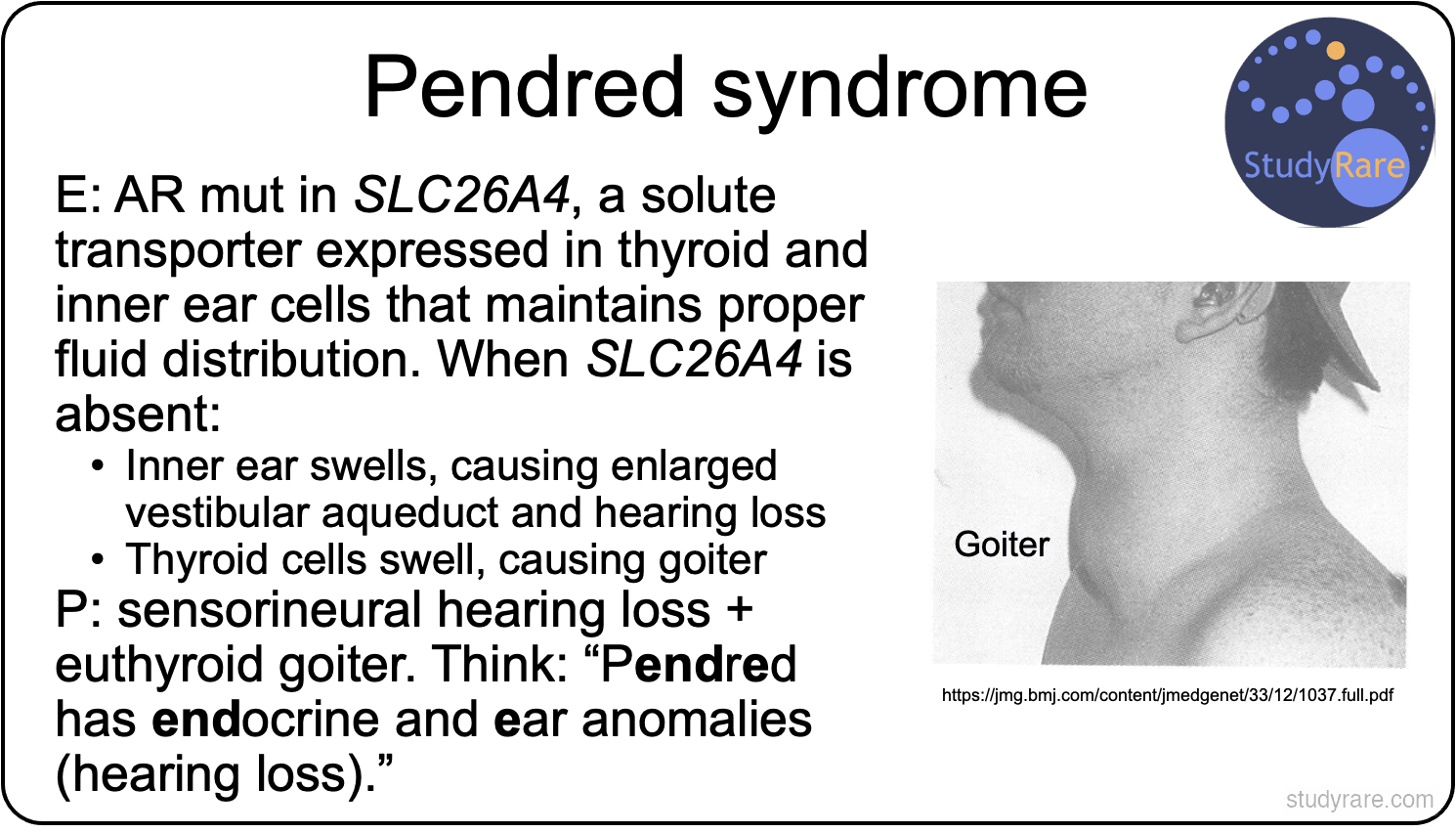
This comprehensive overview covers the SLC26A4 mechanism (solute transporter in thyroid and inner ear cells), the resulting phenotype (sensorineural hearing loss + goiter), and the mnemonic: "Pendred has endocrine and ear anomalies."