Pyridoxine-dependent epilepsy
Log in to starLast updated 4mo ago
A newborn has intractable seizures unresponsive to standard anticonvulsants. Seizures stop dramatically after IV pyridoxine administration.
AR; ALDH7A1 (antiquitin)
- Neonatal or infantile-onset seizures
- Refractory to standard antiepileptic drugs
- Dramatic response to pyridoxine (B6)
- May have prenatal seizures
- Elevated urinary alpha-aminoadipic semialdehyde (α-AASA)
- Intellectual disability (variable, better with early treatment)
- Clinical: dramatic seizure cessation after a trial of IV pyridoxine (under controlled monitoring)
- Biomarkers: elevated urine/plasma alpha-aminoadipic semialdehyde (alpha-AASA) and pipecolic acid; not on standard newborn screening
- Confirm with ALDH7A1 molecular testing
- Lifelong pyridoxine supplementation; some also need lysine restriction and folinic acid
"Refractory neonatal seizures + response to pyridoxine = think PDE (ALDH7A1)": the dramatic cessation of seizures within minutes of empiric pyridoxine (B6) is the clinical hallmark.
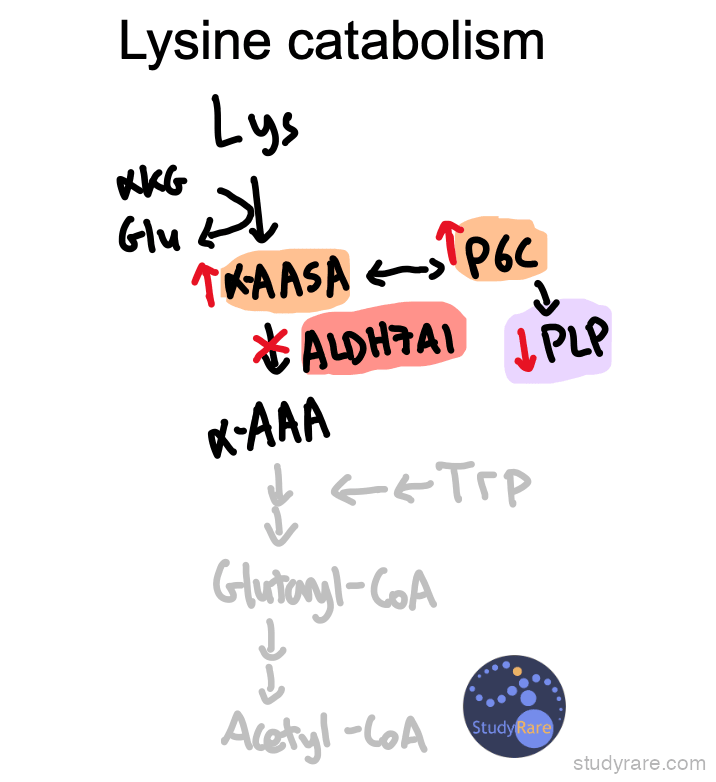
B6 deficiency is the ONLY vitamin deficiency associated with seizures: PDE impairs B6 metabolism because accumulated P6C binds and inactivates pyridoxal 5'-phosphate (PLP, the active form of B6). PLP is a cofactor for GABA synthesis.
Biomarkers: alpha-AASA and pipecolic acid: both are elevated in urine/plasma and confirm the diagnosis alongside ALDH7A1 genetic testing. PDE and GA1 both involve the lysine catabolism pathway.
This diagram shows the lysine catabolism pathway, highlighting where AASA (antiquitin/ALDH7A1) and P6C act, and how they connect to PLP (the active form of vitamin B6) and downstream metabolites including alpha-AAA and tryptophan.