Rubinstein-Taybi syndrome
Log in to starLast updated 4mo ago
Log in to add personal notes on this page.
A child with intellectual disability has broad thumbs and great toes, a beaked nose, and highly arched eyebrows. He has a grimacing smile.
AD (de novo); CREBBP (~60%), EP300 (~10%)
- Broad thumbs and halluces (angulated)
- Distinctive facies: beaked nose, grimacing smile, arched eyebrows
- Intellectual disability
- Short stature
- Increased tumor risk (benign and malignant)
- Clinical recognition of broad, often angulated thumbs and halluces with the distinctive facies and intellectual disability
- Molecular confirmation by CREBBP sequencing/deletion analysis, then EP300 if negative (most variants are de novo)
- Echocardiogram and renal ultrasound for associated anomalies; ophthalmology evaluation
- Developmental and educational support; speech, occupational, and physical therapy
- Surgical correction of broad/angulated thumbs and halluces when function is impaired
- Surveillance for and treatment of feeding difficulties, constipation, recurrent infection, and obstructive sleep apnea
- Awareness of increased tumor risk with prompt evaluation of new masses; cardiac and ophthalmologic follow-up
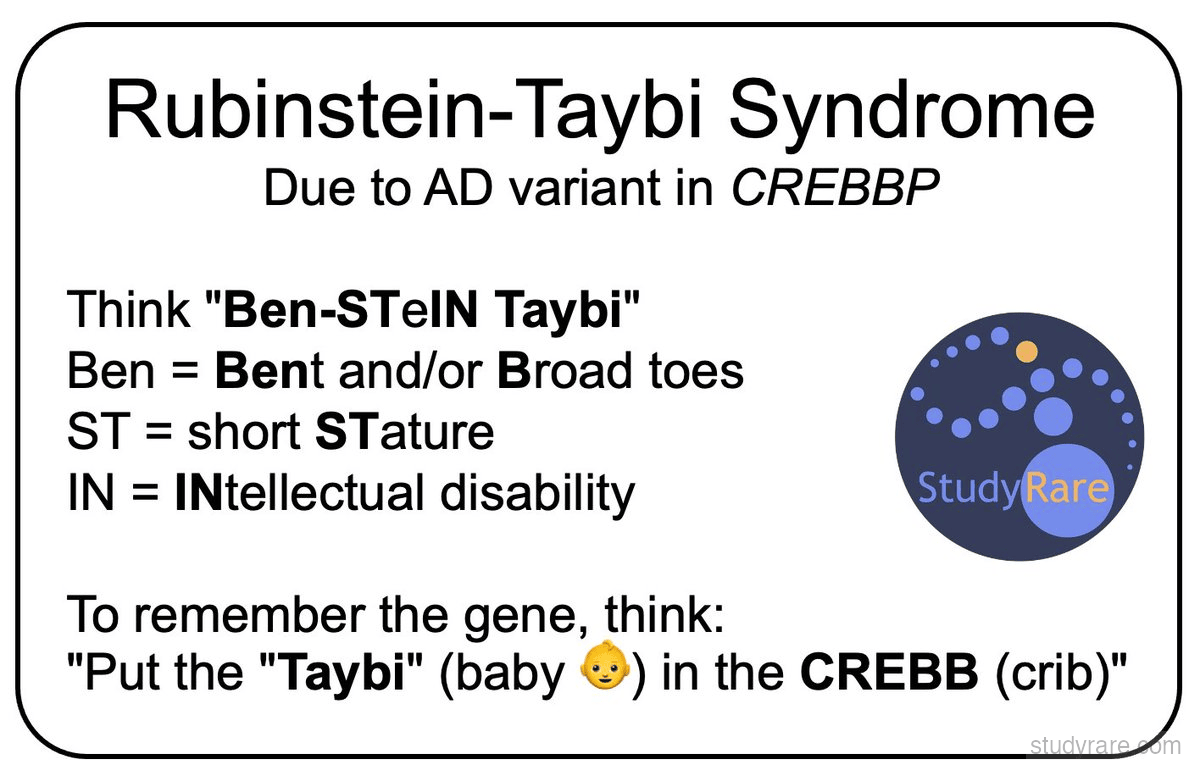
"Put the Taybi (baby) in the CREBB (crib)": CREBBP is the major gene causing Rubinstein-Taybi syndrome.
"Ben-STeIN Taybi": Bent and/or Broad toes and thumbs, Short STature, INtellectual disability.
TAYBI = Thumbs Are Your Best Indicator: broad, angulated thumbs are the most recognizable feature.