
Last updated Nov 3, 2026
A 15-year-old presents with tremor and dysarthria. Slit-lamp exam reveals Kayser-Fleischer rings. Liver enzymes are mildly elevated. Ceruloplasmin is low and 24-hour urine copper is elevated.
AR; ATP7B (copper-transporting ATPase 2). Biallelic pathogenic variants impair copper transport out of the hepatocyte, so copper accumulates.
Copper-transporting ATPase 2 is a P-type ATPase inside the hepatocyte, expressed mainly in liver and kidney. It has two jobs: it incorporates copper into ceruloplasmin, and it moves copper out of the hepatocyte into bile.
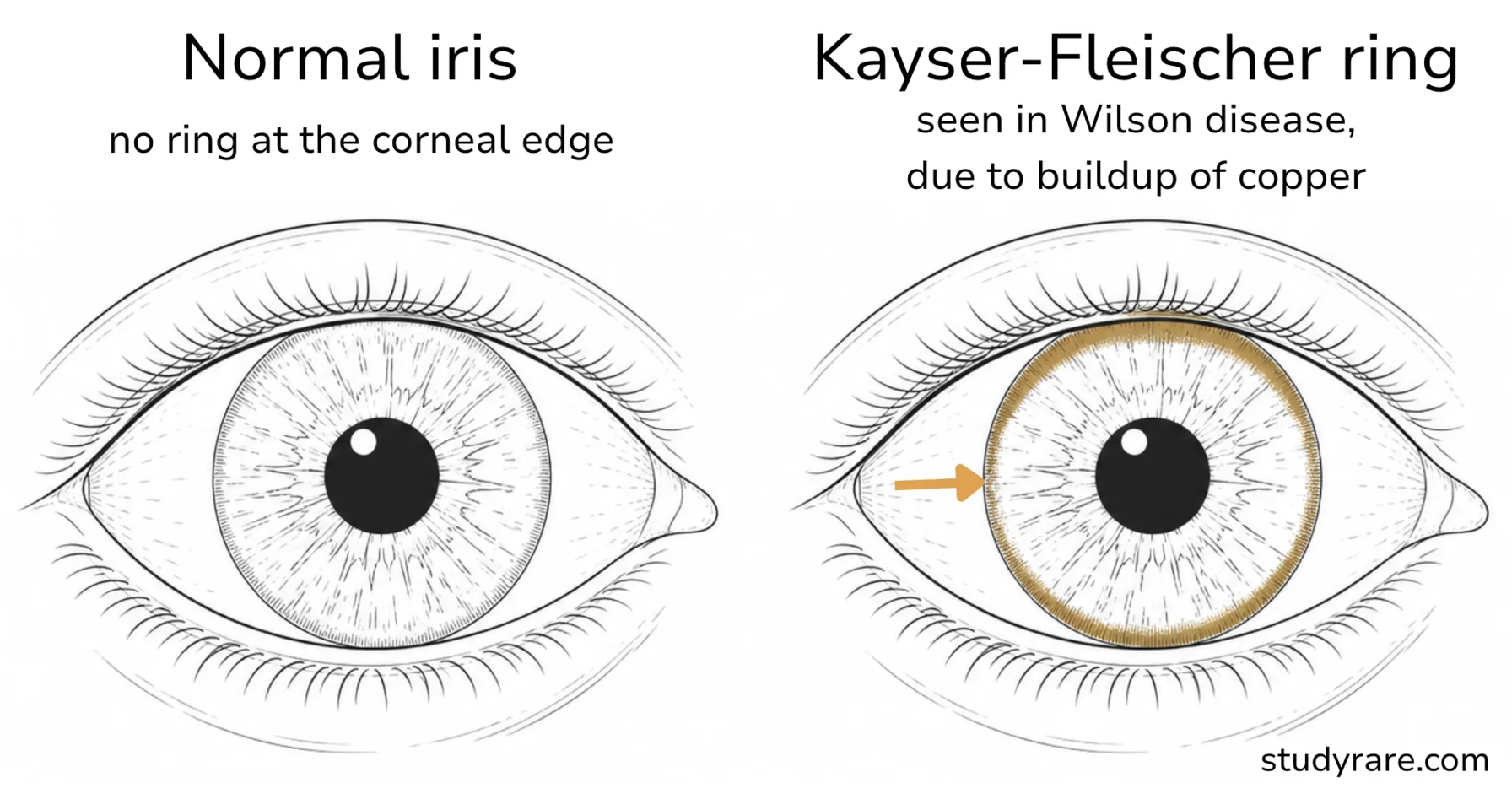
Pathogenic variants impair this function in different ways, and tissue damage follows copper the liver cannot excrete. Accumulation takes several years even when no transporter function remains, and untreated disease manifests from age three to older than 70 years. Children often present with liver disease alone. Copper deposited in the periphery of the cornea forms Kayser-Fleischer rings. A high serum level of copper not bound to ceruloplasmin destroys red cells, which explains the Coombs-negative hemolysis.
Serum ceruloplasmin is usually low, and total serum copper falls with it because ceruloplasmin is the main copper carrier in blood. A normal ceruloplasmin occurs in up to 40% of people with hepatic findings, so it is not a reliable screen. No genotype-phenotype correlation has been identified. Exon sequencing alone can miss promoter variants, so comprehensive testing includes them. Chelators increase urinary copper excretion; zinc presumably induces enterocyte metallothionein, which binds dietary copper and is shed in the feces.
- Hepatic: Hepatitis, cirrhosis, fulminant liver failure
- Neurologic: Tremor, dystonia, dysarthria, psychiatric symptoms
- Ocular: Kayser-Fleischer rings (copper in Descemet membrane)
- Hematologic: Coombs-negative hemolytic anemia
- Low ceruloplasmin (<20 mg/dL)
- Elevated 24-hour urine copper (>100 μg/day)
- Elevated hepatic copper (>250 μg/g dry weight)
- Kayser-Fleischer rings
- ATP7B genetic testing
- Copper chelation (penicillamine, trientine), zinc, liver transplant
"My Wild teenage son (Wilson)": Wilson disease presents in teens (15-35 yo): "Wilson's sons are young" (vs. 40-60 yo in hemochromatosis). Think: "My Wild teenage son (Wilson) is AT Parties until the Cops (Copper) show up," for ATP7B and copper accumulation. CeruLOWplasmin is LOW in WiLson's. The "W" in Wilson's has 3 ("tri") spikes on top, for trientine (second-line chelator). Multiple things are down: mood is down (depression), ceruloplasmin is down.