Birt-Hogg-Dubé syndrome
Log in to starLast updated 4mo ago
Log in to add personal notes on this page.
A patient with a spontaneous pneumothorax has numerous skin-colored papules on the face and neck (fibrofolliculomas). Imaging reveals bilateral renal tumors.
AD; FLCN (folliculin)
- Fibrofolliculomas (skin lesions - face, neck)
- Pulmonary cysts → spontaneous pneumothorax
- Renal tumors (chromophobe RCC, oncocytoma, hybrid)
- Bilateral/multifocal renal tumors
- Clinical suspicion from the dermatologic-pulmonary-renal triad: multiple fibrofolliculomas, basally located lung cysts with spontaneous pneumothorax, and bilateral/multifocal renal tumors
- Renal tumors are characteristically chromophobe RCC, oncocytoma, or hybrid oncocytic/chromophobe tumors
- Confirm with germline FLCN sequencing and deletion/duplication analysis
- Renal surveillance with periodic abdominal MRI (preferred over CT to limit cumulative radiation); nephron-sparing surgery for tumors reaching ~3 cm
- Counsel on pneumothorax risk: smoking cessation, caution with high-pressure activities (scuba diving), and prompt evaluation of acute dyspnea or chest pain
- Dermatologic management of symptomatic fibrofolliculomas (benign; treated for cosmesis)
- Cascade testing of at-risk relatives
"Bird-Hawk-Dube" syndrome, mutation in FaLCoN: Birds fly in the air, which reminds you of lung cysts and pneumothorax.
BiRRT = Bilateral Renal and Respiratory (Lung) Tumors and cysts. HOG = Hair follicle OverGrowth with fibrous tissue (fibrofolliculomas). DUBe = Dermatologic features are Usually Benign.
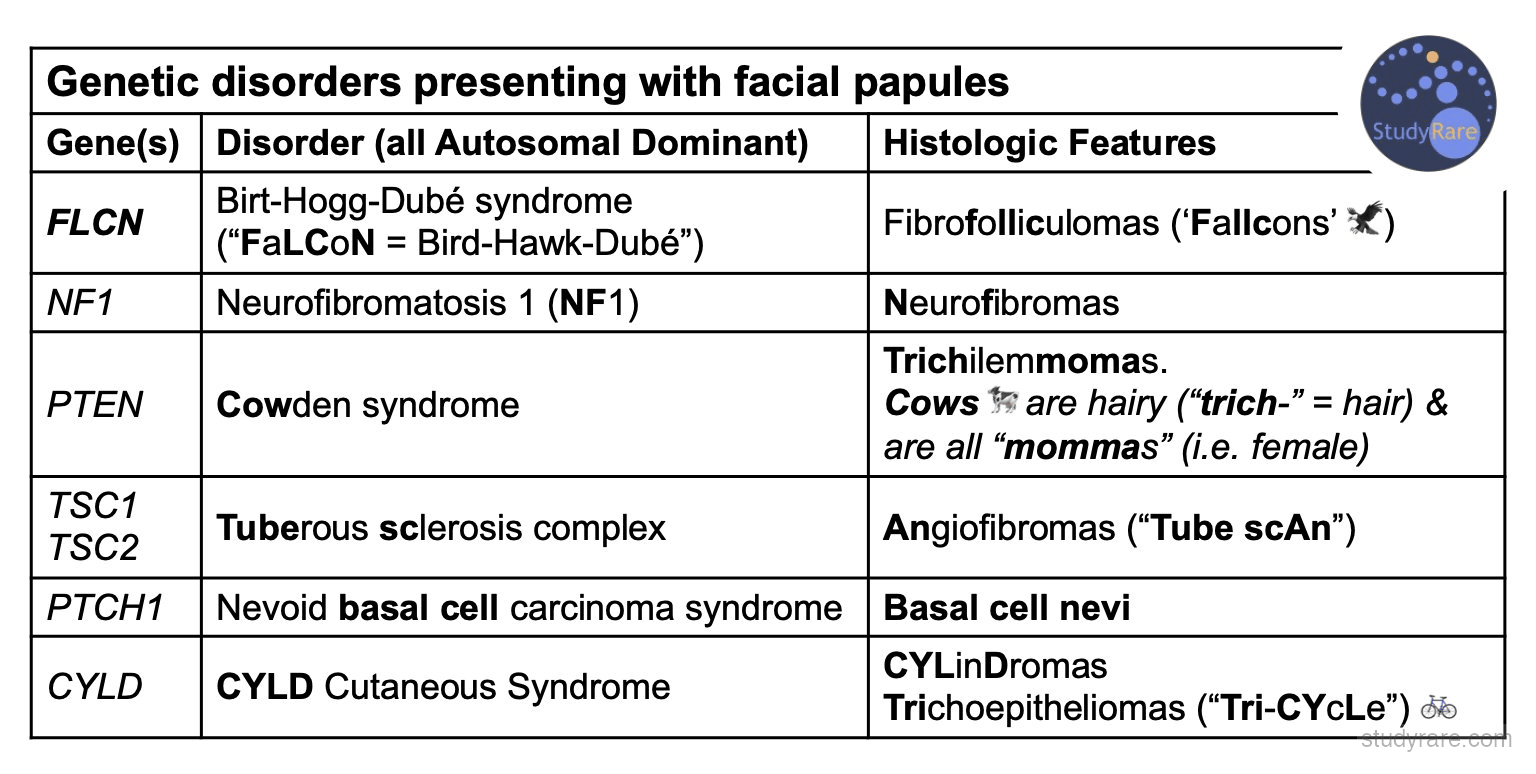
This table compares genetic disorders presenting with facial papules, including BHD, NF1, Cowden, TSC, nevoid basal cell carcinoma, and CYLD cutaneous syndrome.