Bloom syndrome
Log in to starLast updated 4mo ago
A child with severe growth restriction has sun-sensitive facial erythema in a butterfly distribution. He has frequent infections and develops leukemia.
AR; BLM (RecQ helicase family)
- Common in Ashkenazi Jewish population
- Severe proportionate growth restriction (pre- and postnatal)
- Facial sun-sensitive telangiectatic erythema (butterfly rash)
- Immunodeficiency
- Increased sister chromatid exchanges (diagnostic)
- Cancer predisposition (leukemia, lymphoma, solid tumors)
- Diabetes
- Male infertility
- Cytogenetic hallmark: markedly elevated sister chromatid exchange (SCE) on metaphase analysis, the most specific diagnostic test
- Quadriradial (symmetric) chromosome configurations on karyotype
- Confirm with germline BLM sequencing; targeted analysis for the recurrent Ashkenazi Jewish founder variant (blmAsh)
- Broad cancer surveillance reflecting the very high lifetime risk: early and frequent screening for leukemia/lymphoma and for solid tumors, including colonoscopy beginning in early adulthood
- Minimize diagnostic and therapeutic radiation; use reduced-intensity chemotherapy protocols given heightened genotoxic sensitivity
- Sun protection for the photosensitive facial erythema
- Monitor for and manage diabetes, immunodeficiency-related infections, and growth/nutrition
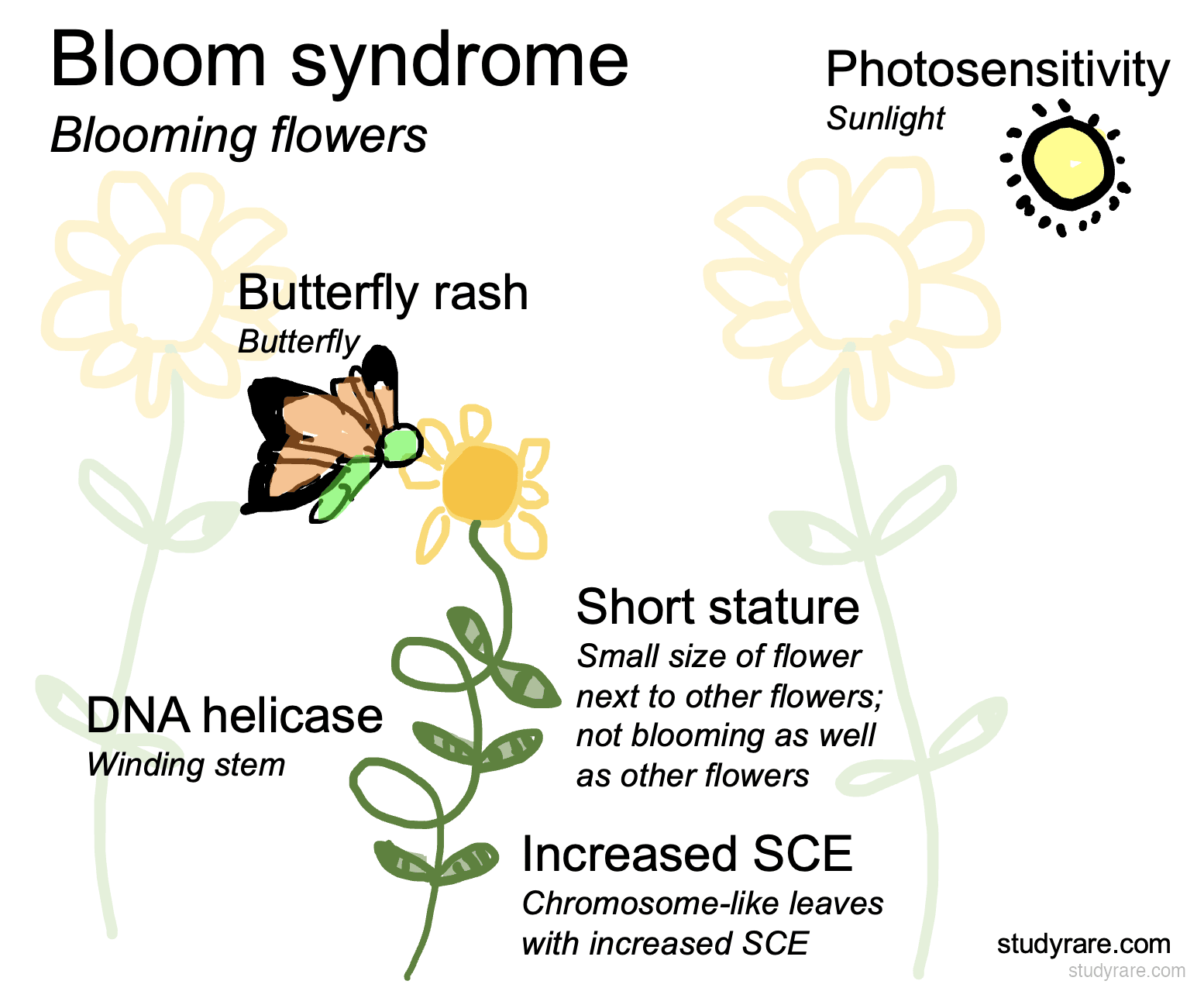
Think "blooming red rose": The butterfly rash (facial telangiectasia) is like a red rose. Rose petals look wound up, just like DNA helicase unwinds twisty DNA. Flowers bloom in the sun (photosensitivity). Short stature = opposite of blooming (a shriveled, short flower).
"B1oom" has 5 letters, on chr 15: BLM is on chromosome 15q26.1. Think of a bouquet of roses.
Bloom = "Butt" / bottom cancer: Colon cancer risk. Also leukemia/lymphoma. The winding stem of a rose looks like a colon. Increased sister chromatid exchanges (SCE) on cytogenetics (vs chromosome breakage in Fanconi, vs 7;14 translocation in ataxia-telangiectasia).