Last updated 4mo ago
Log in to add personal notes on this page.
A 12-year-old presents with progressive gait ataxia, dysarthria, and loss of reflexes in the lower limbs. He also has scoliosis. Echocardiogram shows hypertrophic cardiomyopathy.
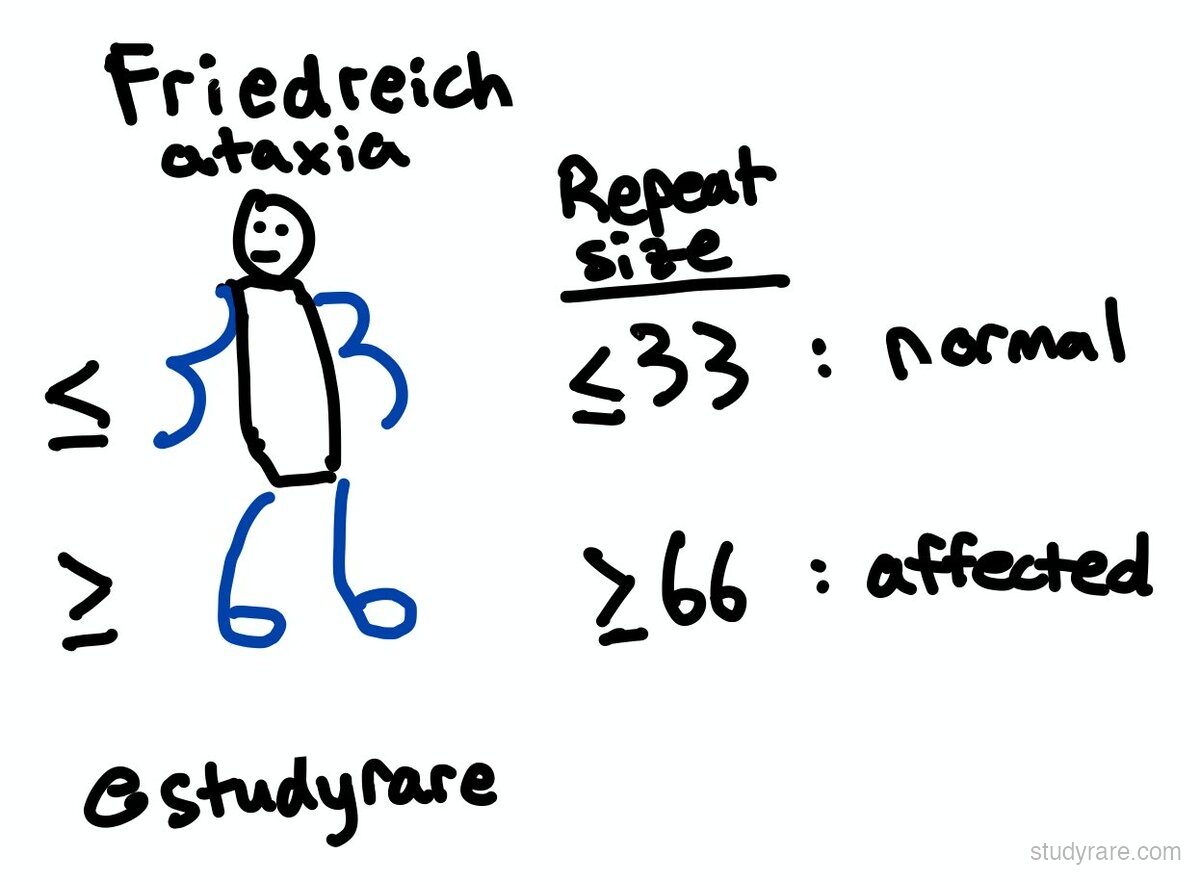
AR; GAA trinucleotide repeat expansion in FXN (frataxin)
- Normal: 5-33 repeats
- Affected: 66-1000+ (usually 600-900) on both alleles
- Progressive ataxia (onset usually <25 years)
- Dysarthria
- Loss of reflexes, Babinski sign
- Hypertrophic cardiomyopathy (#1 cause of death)
- Scoliosis, pes cavus
- Diabetes mellitus (~10-30%)
- Targeted FXN GAA repeat testing confirms the diagnosis; most patients are homozygous for the expansion, a minority are compound heterozygous (expansion plus a point variant)
- Repeat sizing by PCR with reflex to Southern blot or triplet-repeat-primed PCR for large expansions
- Baseline workup: echocardiogram (hypertrophic cardiomyopathy), HbA1c/glucose (diabetes), and scoliosis evaluation
- Longer GAA repeats correlate with earlier onset and more severe disease; offer carrier and reproductive counseling (autosomal recessive)
- No cure; multidisciplinary supportive care (PT/OT, speech, mobility aids)
- Omaveloxolone is an approved disease-modifying therapy that can slow neurologic progression
- Cardiac surveillance and treatment of cardiomyopathy and arrhythmia (the leading cause of death); manage diabetes
- Orthopedic management of scoliosis and foot deformity; routine audiologic and ophthalmologic monitoring
"FR-ATAX-IN": FRiedreich ATAXia proteIN (frataxin).
"Ataxic GAAit": GAA trinucleotide repeat expansion causes Friedreich ataxia.
Friedreich → autosomal recessive. The only common AR trinucleotide repeat disorder (all other major TNR disorders are AD).