Last updated 4mo ago
A child of Ashkenazi Jewish ancestry has hepatosplenomegaly, thrombocytopenia, and bone pain. Bone marrow shows "Gaucher cells" with wrinkled tissue paper appearance.
AR; GBA1 (glucocerebrosidase)
- Common in Ashkenazi Jewish population (1:15 carrier frequency)
Types:
- Type 1 (non-neuronopathic): Most common; hepatosplenomegaly, bone disease, no CNS
- Type 2 (acute neuronopathic): Infantile, severe CNS, death by 2-4 years
- Type 3 (chronic neuronopathic): CNS + visceral
- Gaucher cells in bone marrow
- Bone crises, avascular necrosis, Erlenmeyer flask deformity
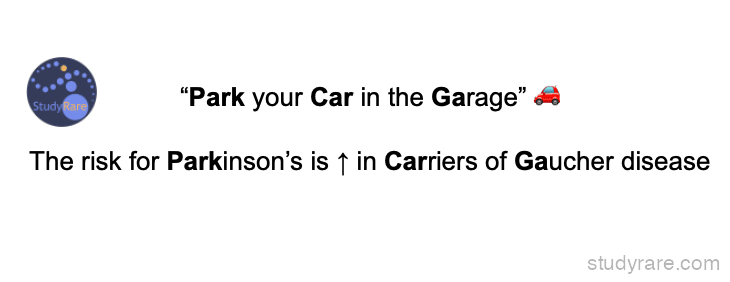
- Increased risk of Parkinson disease (GBA1 variants)
- Not on RUSP; suspected from hepatosplenomegaly with cytopenias
- Deficient glucocerebrosidase (acid beta-glucosidase) activity in leukocytes is diagnostic, confirmed with GBA1 sequencing
- Supportive biomarkers: elevated chitotriosidase, glucosylsphingosine (lyso-Gb1); Gaucher cells on marrow are suggestive but not required
- Enzyme replacement therapy (imiglucerase), substrate reduction (eliglustat)
GAUCCHER / GlUCoCERebrosidase: the "U" is in the same position in both words, linking disease to enzyme.
"G-ouch!-ers": bone pain is a hallmark (bone crises, avascular necrosis, Erlenmeyer flask deformity).
Gaucher has a Good brain: Type 1 (most common, ~95%) has no CNS involvement. "Brain FoG for all LSDs, except with G."
"Crumpled tissue paper" macrophages: Gaucher cells on bone marrow biopsy look like crumpled tissue paper (need tissues to wipe tears from terrible bone pain).
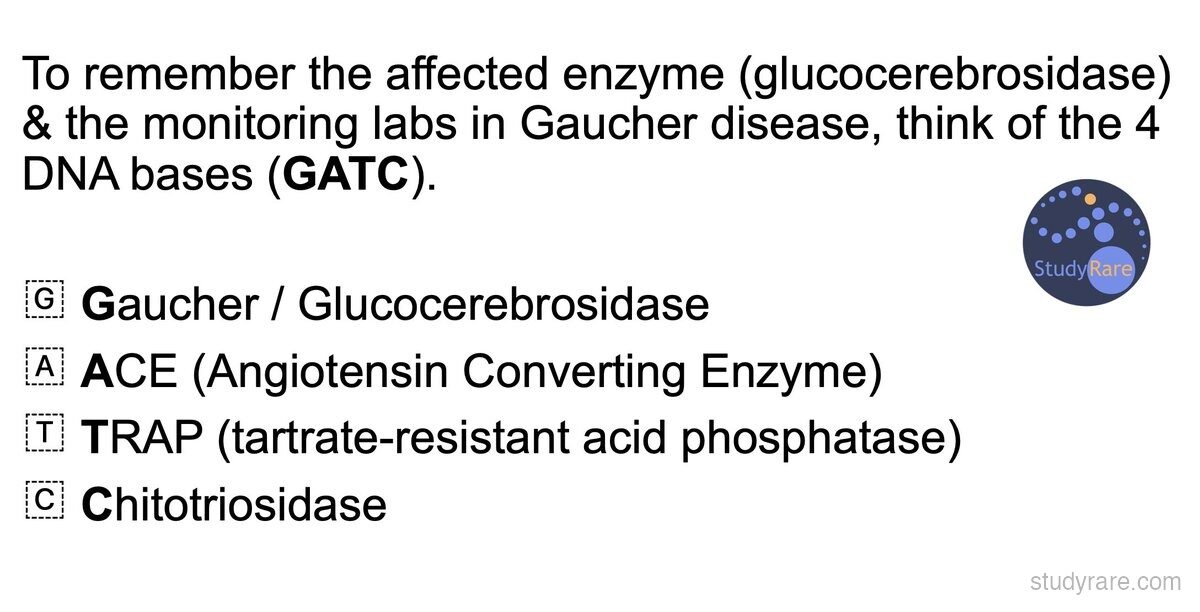
To remember the affected enzyme (glucocerebrosidase) and the monitoring labs in Gaucher disease, think of the 4 DNA bases (GATC): Gaucher/Glucocerebrosidase, ACE, TRAP, Chitotriosidase.
"Park your Car in the Garage": the risk for Parkinson's disease is increased in carriers of Gaucher disease.