Last updated 4mo ago
A teenage boy has painful burning in hands and feet (acroparesthesias), inability to sweat, and angiokeratomas on his trunk. His mother has mild symptoms.
XLR; GLA (alpha-galactosidase A)
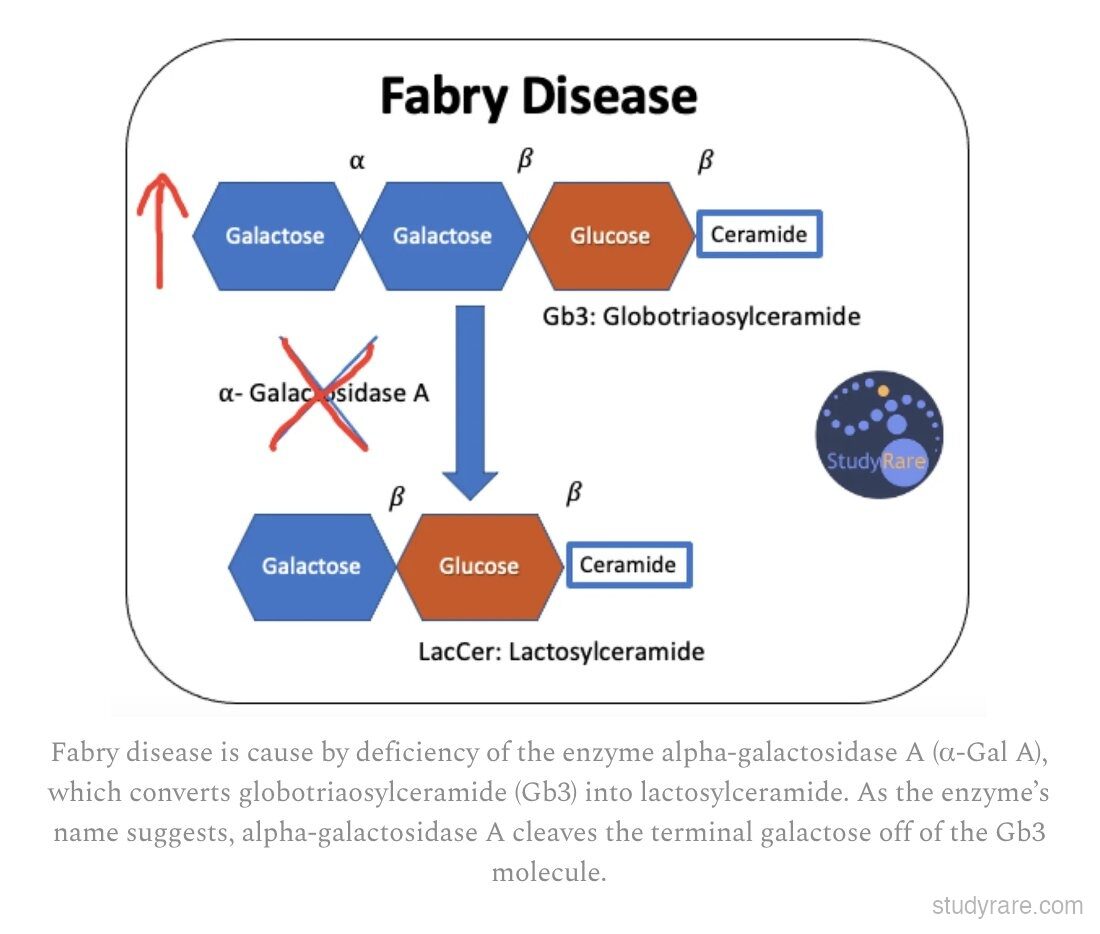
- Alpha-galactosidase A deficiency → Gb3 accumulation
- Pain: Acroparesthesias (hands/feet), triggered by heat/exercise
- Skin: Angiokeratomas (clustered on trunk, "bathing suit" distribution)
- Ocular: Corneal verticillata (whorl-like opacities)
- Renal: Progressive renal failure
- Cardiac: LVH, arrhythmias
- CNS: Stroke (young adult)
- Females can be significantly affected
References: GeneReviews | Pediatric Management (2015) | Adult Management (2018)
- On the RUSP (added for X-linked screening); flagged by low alpha-galactosidase A activity
- Males: deficient alpha-galactosidase A enzyme activity is diagnostic, confirmed with GLA sequencing
- Females: enzyme activity can be normal (random X-inactivation), so GLA molecular testing is required
- Elevated plasma globotriaosylsphingosine (lyso-Gb3) supports the diagnosis and tracks disease burden
- Enzyme replacement therapy (agalsidase), migalastat (chaperone for amenable variants)
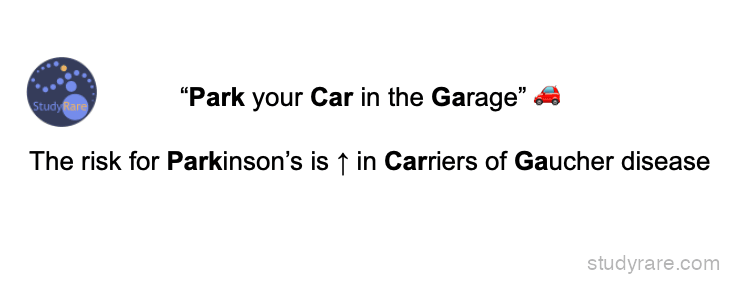
"Park your Car in the Garage": the risk for Parkinson's disease is increased in Carriers of Gaucher disease. This is a clinically important association that helps distinguish Gaucher from Fabry (both are sphingolipidoses).
FABRY: Feel the Burn, Angiokeratoma, Renal: covers the triad of acroparesthesias (burning pain), skin findings, and progressive renal failure.
"FabRY mainly affects Y chromosomes (boys)": Fabry is X-linked, so males are primarily affected.
"Spray Fabreze on Ceramic Tiles": ceramide trihexoside (Gb3) accumulates. Also: Fabry lives Far into the future (death from ESRD in 40s, unlike infantile-onset lysosomal disorders).
All LSDs are AR except Fabry (XL): Fabry is the only X-linked lysosomal storage disorder.
This diagram shows the enzymatic defect in Fabry disease: alpha-galactosidase A cleaves the terminal galactose from globotriaosylceramide (Gb3) to produce lactosylceramide.