Last updated 4mo ago
A macrocephalic infant develops acute dystonia after a febrile illness. MRI shows frontotemporal atrophy and basal ganglia injury.
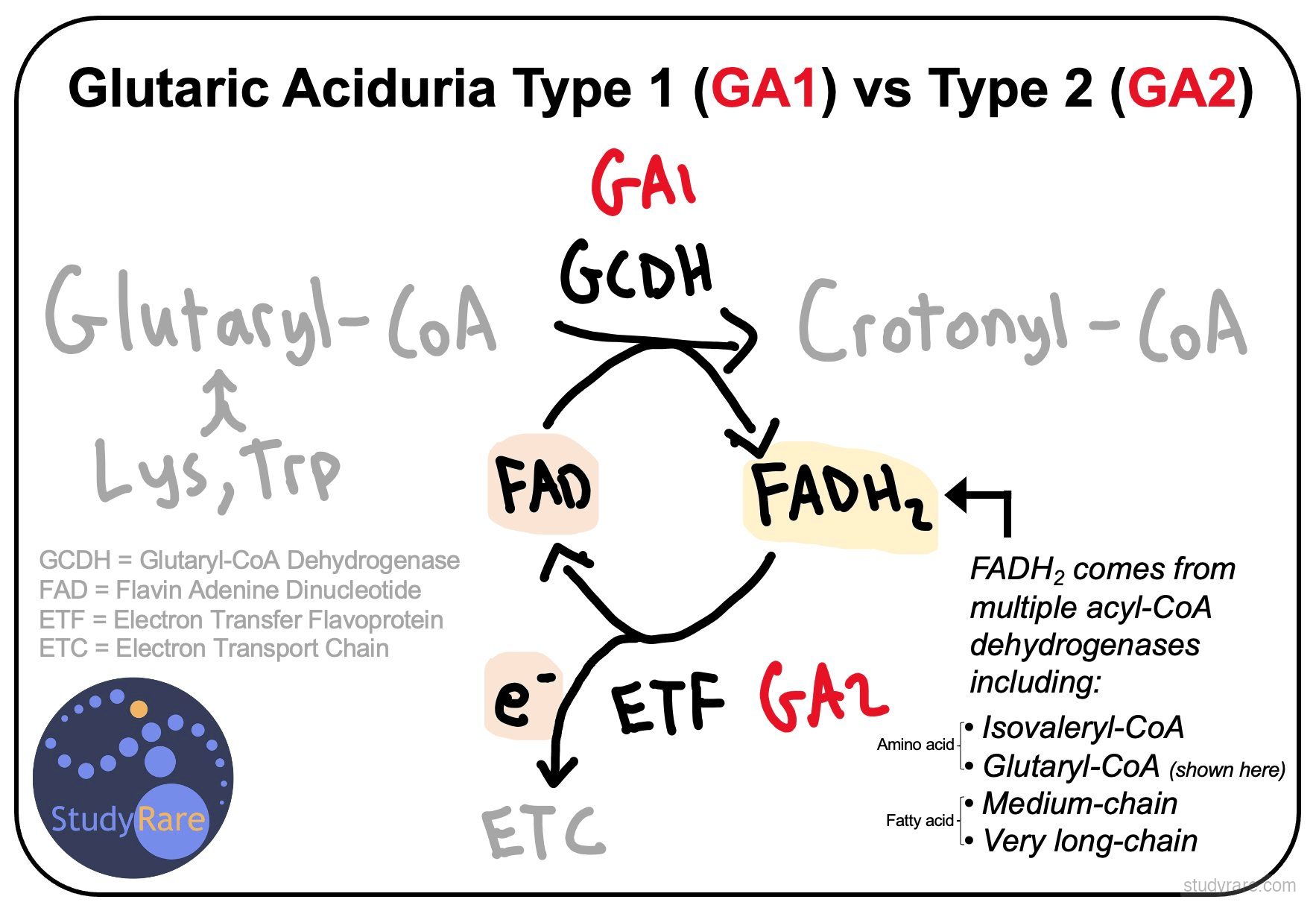
AR; GCDH (glutaryl-CoA dehydrogenase)
- Lysine/tryptophan degradation defect
- Macrocephaly
- Acute encephalopathic crises → dystonia
- MRI: widened sylvian fissures, "bat wing" appearance
- On RUSP
- On RUSP: flagged by elevated glutarylcarnitine (C5-DC) on newborn screening acylcarnitine profile
- Urine organic acids: elevated glutaric and 3-hydroxyglutaric acid (low-excretor phenotype can have minimal organic aciduria)
- Confirmation: deficient glutaryl-CoA dehydrogenase activity or biallelic GCDH variants
- Lysine restriction, carnitine, aggressive management during illness
GA1 has a "G1Ant head": macrocephaly is a hallmark. "91utaric": reverse 9 and 1 to get chromosome 19 (location of GCDH).
NBS: elevated C5-DC (glutarylcarnitine): on newborn screening, C5-DC is the key acylcarnitine marker.
Lysine and Tryptophan in gLuTaric acidemia: these are the two amino acids whose degradation is impaired. Basal ganGLia are affected in GLutaric acidemia, causing movement disorders (cognition spared).
This diagram compares the biochemical pathways of GA1 (GCDH deficiency) and GA2 (ETF/electron transfer deficiency), showing how both converge on FAD metabolism.