Last updated Nov 3, 2026
A 50-year-old man presents with fatigue, joint pain, and elevated liver enzymes. He has bronze-colored skin and diabetes. Transferrin saturation is 75% and ferritin is 2000 ng/mL.
AR; HFE (hereditary hemochromatosis protein). Loss-of-function variants, most often p.Cys282Tyr homozygosity, leave hepcidin too low for the iron load.
- C282Y (p.Cys282Tyr) homozygosity - classic type 1
- H63D: milder or compound with C282Y
- Tight linkage disequilibrium with HLA-A3 on the ancestral haplotype (historical typing marker before HFE sequencing was available)
HFE resembles an HLA class I molecule and reaches the cell surface paired with beta-2-microglobulin. It binds transferrin receptor 1 on the cell surface and, on hepatocytes, works with a complex of transferrin receptor 2, a bone morphogenetic protein receptor, and hemojuvelin, which lets the liver raise hepcidin, the main regulator of iron metabolism.
The mechanism is loss of function. p.Cys282Tyr breaks a disulfide bond and changes the shape of HFE, so it no longer interacts properly with beta-2-microglobulin or the hepatocyte complex, and hepatocytes lose the capacity to upregulate hepcidin. Hepcidin normally binds ferroportin, the only known exporter of cellular iron, and the pair is degraded. With hepcidin low, ferroportin stays active, so enterocytes absorb more iron from a normal diet and reticuloendothelial cells recycle more iron from old red cells. That explains the raised transferrin saturation and the iron deposited in the liver, pancreas, heart, skin, joints, and anterior pituitary.
Penetrance is low, so genotype alone does not predict disease: 38% to 50% of p.Cys282Tyr homozygotes develop raised ferritin and 10% to 33% clinical hemochromatosis. Penetrance is lower in premenopausal females; physiologic blood loss plausibly, though unproven, accounts for it.
- Iron overload (excessive intestinal absorption)
- Hepatic: Cirrhosis, hepatocellular carcinoma
- Cardiac: Cardiomyopathy
- Endocrine: Diabetes ("bronze diabetes"), hypogonadism
- Skin: Bronze hyperpigmentation
- Joints: Arthropathy
- Elevated transferrin saturation (>45%)
- Elevated ferritin
- HFE genetic testing
- Liver biopsy or MRI for iron quantification
- Therapeutic phlebotomy
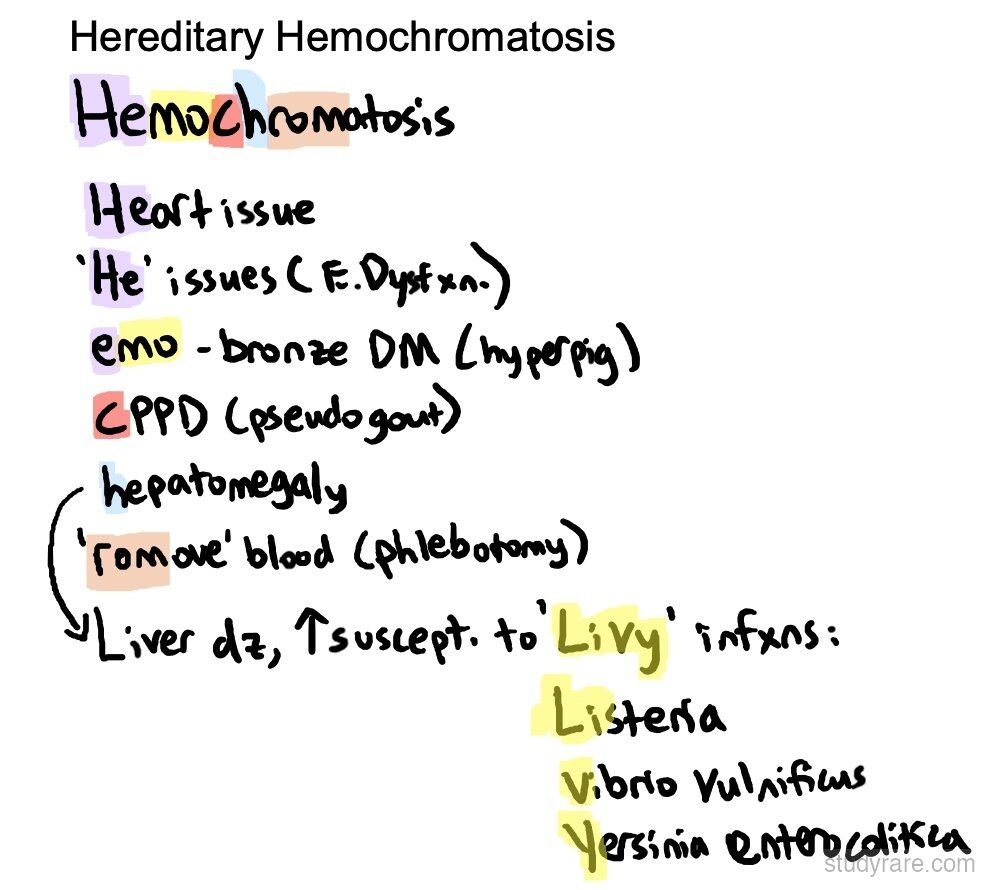
"Him-ochromatosis": Hemochromatosis more commonly affects males (40-60 yo), so think "Him-ochromatosis." Remember the mnemonic "Hemochromm": Heart (cardiomyopathy), He issues (erectile dysfunction, hypogonadism), bronze diabetes (hyperpig + DM), CPPD (pseudogout), hepatomegaly/liver cancer, remove blood (phlebotomy). The C282Y variant is a classic founder effect example in Northern Europeans.
This visual walks through the "Hemochromatosis" mnemonic: heart issues, erectile dysfunction, bronze DM, CPPD, hepatomegaly, phlebotomy treatment, and increased susceptibility to "Livy" infections (Listeria, Vibrio vulnificus, Yersinia enterocolitica).