Long-chain 3-hydroxyacyl-CoA dehydrogenase deficiency (LCHADD)
Log in to starLast updated 4mo ago
A child with recurrent rhabdomyolysis has cardiomyopathy and peripheral neuropathy. Mother had HELLP syndrome during pregnancy.
AR; HADHA (part of mitochondrial trifunctional protein)
- Common variant: c.1528G>C (E510Q)
- Cardiomyopathy, hepatopathy
- Rhabdomyolysis
- Peripheral neuropathy and retinopathy (distinctive)
- Maternal pregnancy complications (HELLP, AFLP)
- On RUSP
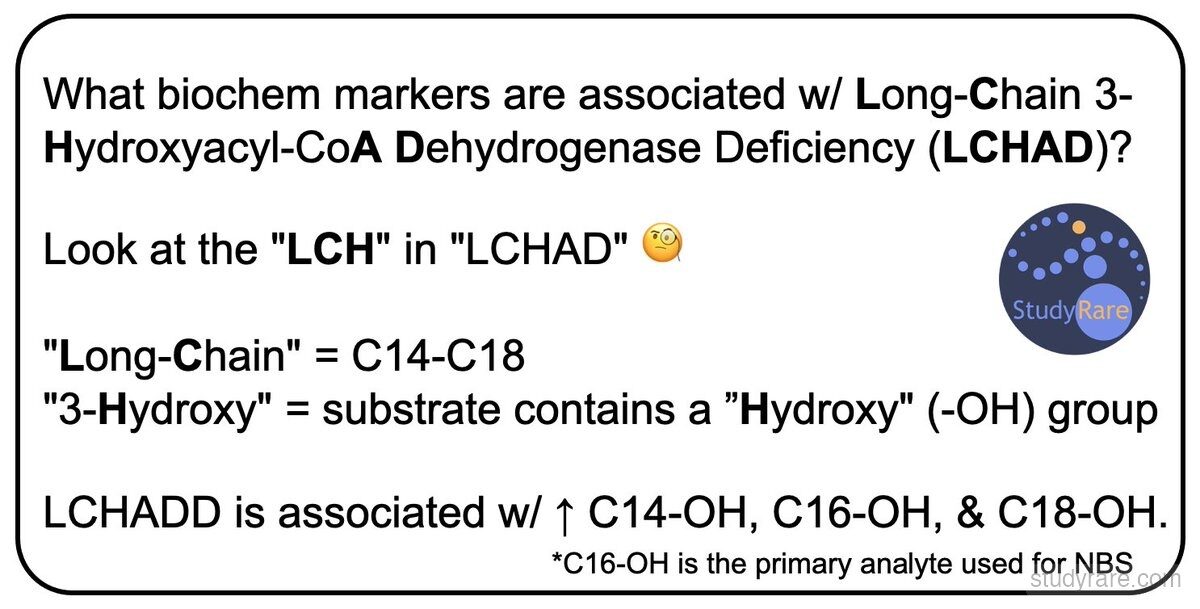
- Detected on newborn screening: elevated C16-OH (3-hydroxypalmitoylcarnitine), with C14-OH and C18-OH long-chain hydroxyacylcarnitines
- Hypoketotic hypoglycemia during catabolic stress
- Confirmation: HADHA molecular testing (common c.1528G>C variant) or enzyme assay
- Avoid fasting; emergency IV glucose ("sick-day" protocol) during illness
- Low long-chain-fat diet with medium-chain triglyceride (MCT) supplementation
- Triheptanoin (odd-chain triglyceride) approved for long-chain fatty acid oxidation disorders
- Surveillance for cardiomyopathy, retinopathy, and peripheral neuropathy
"HADHAD" spells HADHA: the last 3 letters of "LCHAD," repeated twice ("HAD-HAD"), basically spell the gene name (HADHA).
"Eye chart" for LCHAD: LCHADD has retinopathy (think of the two "D"s as eyes). This distinguishes it from VLCADD, which does not cause retinopathy.
LCHAD biomarkers have "-OH" add-ons: LCHAD has elevated C14-OH, C16-OH, and C18-OH. The "H" in "LCHAD" and "-OH" go together: hydroxy-acylcarnitines. Compare to VLCAD which has C14:1 (no -OH).
The "LCH" in "LCHAD" encodes the biomarker logic: "Long-Chain" = C14-C18, "3-Hydroxy" = the substrate contains a hydroxy (-OH) group. C16-OH is the primary NBS analyte.