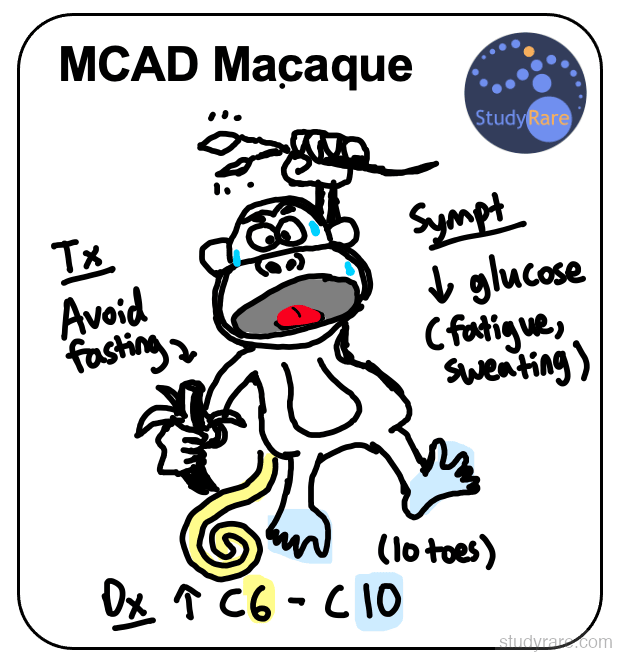
Medium-chain acyl-CoA dehydrogenase deficiency (MCADD)
On ABGC's listListed on the ABGC Self-Study GuideLog in to starLast updated 4mo ago
Log in to add personal notes on this page.
A previously healthy 14-month-old becomes unresponsive after an overnight fast during a viral illness. Labs show hypoketotic hypoglycemia.
AR; ACADM
- Common variant: c.985A>G (K329E) - ~80% of alleles
- Most common FAO disorder
- Hypoketotic hypoglycemia (inappropriately low ketones)
- Hepatomegaly, elevated liver enzymes during crisis
- Risk of sudden death, particularly in infancy.
- On RUSP
- Newborn screening (acylcarnitine profile): elevated C8 (octanoylcarnitine), with elevated C8/C10 ratio
- During crisis: hypoketotic hypoglycemia, elevated medium-chain dicarboxylic acids on urine organic acids
- Confirmatory testing: molecular analysis of ACADM (common c.985A>G allele) and/or enzyme activity assay
- Avoid fasting, emergency protocol during illness
NBS: High C8: on newborn screening acylcarnitine profile, elevated C8 (octanoylcarnitine) is the key marker for MCADD.
Hypo-ketotic hypoglycemia: MCADD cannot break down medium-chain fats to make ketone bodies, so during fasting, glucose is used up without ketone backup. "Defective beta oxidation of fats, can't generate acetyl-CoA from fat, so no ketone bodies."