Mitochondrial neurogastrointestinal encephalomyopathy (MNGIE)
Log in to starLast updated 4mo ago
A young adult with progressive external ophthalmoplegia has severe GI dysmotility, cachexia, and peripheral neuropathy.
AR; TYMP (thymidine phosphorylase)
- GI dysmotility (gastroparesis, pseudo-obstruction)
- Cachexia
- PEO, ptosis
- Peripheral neuropathy
- Leukoencephalopathy
- Markedly reduced thymidine phosphorylase activity in leukocytes
- Elevated plasma thymidine and deoxyuridine (the biochemical hallmark)
- Brain MRI: diffuse leukoencephalopathy; muscle shows secondary mtDNA depletion/deletions
- Confirmation: TYMP molecular testing
- Largely supportive: nutritional support (often parenteral) for cachexia and GI failure, pain and dysmotility management
- Allogeneic HSCT can restore thymidine phosphorylase activity; liver transplant and enzyme/carrier-erythrocyte replacement are being studied
- Nuclear gene (TYMP), autosomal recessive: standard 25% sibling recurrence risk (contrast with maternally inherited mtDNA disorders)
MNGIE = the diagnosis: the name encodes all the key features: Mitochondrial NeuroGastroIntestinal Encephalomyopathy. GI dysmotility and cachexia dominate the presentation.
TYMP = thymidine phosphorylase: deficiency causes excess thymidine (and deoxyuridine), which leads to mitochondrial DNA instability. Patients are often initially misdiagnosed with anorexia nervosa due to severe cachexia. Treatment options include BMT, ERT, and liver transplant.
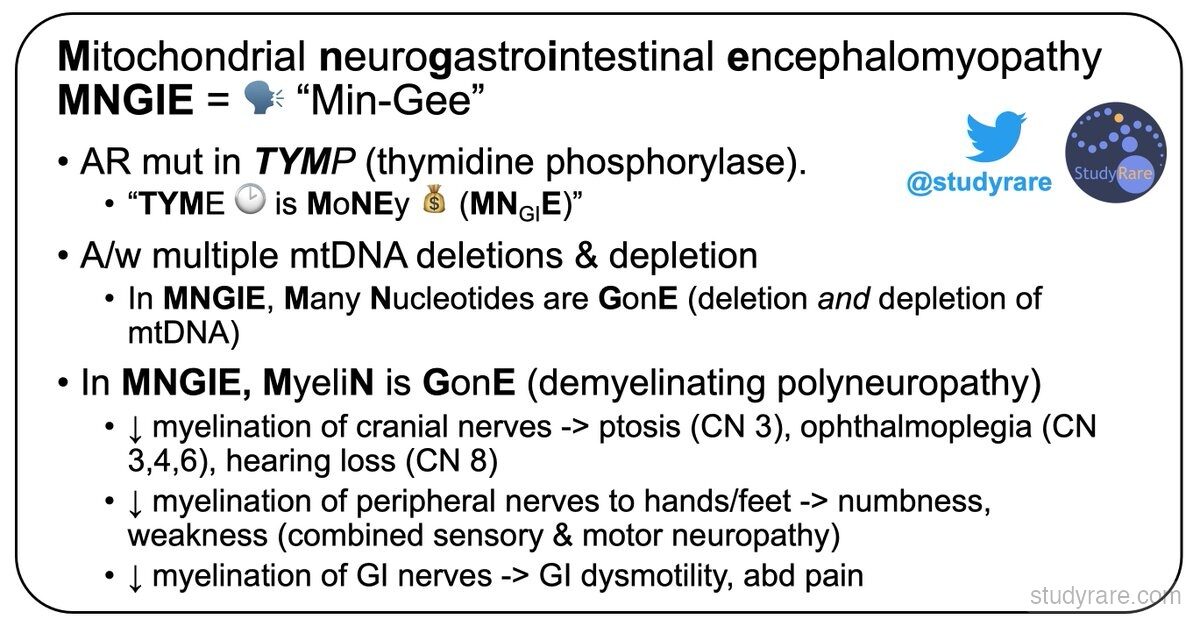
This overview encodes the gene ("TYME is MoNEy"), the mtDNA consequences ("Many Nucleotides are GonE"), and the demyelinating polyneuropathy ("MyeliN is GonE") affecting cranial nerves, peripheral nerves, and GI nerves.