POLG-related disorders (Alpers-Huttenlocher syndrome)
Log in to starLast updated 4mo ago
An infant with refractory seizures and developmental regression develops liver failure. Valproate administration causes acute hepatotoxicity.
AR; POLG (mitochondrial DNA polymerase gamma)
- Spectrum of phenotypes (Alpers = severe infantile)
- Alpers syndrome: Refractory seizures, developmental regression, liver failure
- VALPROATE CONTRAINDICATED (triggers fatal hepatotoxicity)
- Progressive external ophthalmoplegia (milder forms)
- Sensory ataxic neuropathy (SANDO)
- mtDNA depletion/deletions
- Molecular testing of POLG is diagnostic (biallelic variants)
- Supportive findings: elevated lactate (blood/CSF), abnormal liver function tests, mtDNA depletion or multiple deletions on muscle/liver tissue
- Brain MRI and EEG support the encephalopathy phenotype; not on newborn screening
- Avoid valproate; supportive care; liver transplant controversial
"vALPRoic acid in ALPeRs": one might be tempted to give valproic acid for the refractory seizures, but it is contraindicated and may precipitate fatal liver failure.
"PEO caused by POLG": progressive external ophthalmoplegia (PEO) in milder POLG phenotypes. Alpers-Huttenlocher = Hepatic, since "Huttenlocher" reminds you of the hepatic (liver) involvement that distinguishes Alpers from other seizure disorders.
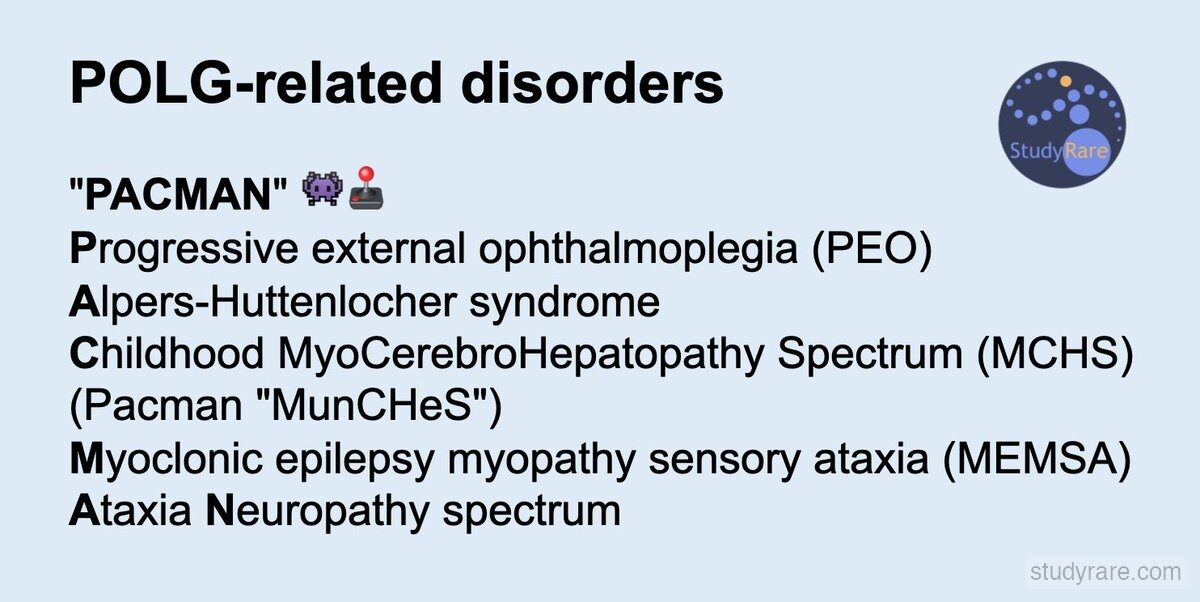
"PACMAN" encodes the spectrum of POLG phenotypes: Progressive external ophthalmoplegia, Alpers-Huttenlocher, Childhood MyoCerebroHepatopathy Spectrum, Myoclonic epilepsy myopathy sensory ataxia (MEMSA), and Ataxia Neuropathy spectrum.