Rhizomelic chondrodysplasia punctata (RCDP)
Log in to starLast updated 4mo ago
A newborn with severe proximal limb shortening has cataracts and ichthyosis. X-rays show stippled calcifications in the epiphyses. Plasmalogen levels are severely reduced.
AR
- Type 1 (most common): PEX7 (peroxin 7, PTS2 receptor)
- Type 2: GNPAT
- Type 3: AGPS
- Rhizomelic limb shortening (proximal > distal)
- Stippled epiphyses (chondrodysplasia punctata)
- Cataracts (bilateral, congenital)
- Ichthyosis
- Severe intellectual disability
- Growth restriction
- Joint contractures
- Reduced plasmalogens (diagnostic)
- Plasmalogen levels (RBCs), phytanic acid (normal in type 1), genetic testing
- Supportive only; no disease-modifying therapy. Cataract extraction, orthopedic management of contractures and short stature, seizure control
- Nutrition/feeding support and respiratory monitoring; most severe (type 1) form has poor survival beyond early childhood
- Genetic counseling and carrier testing for at-risk relatives
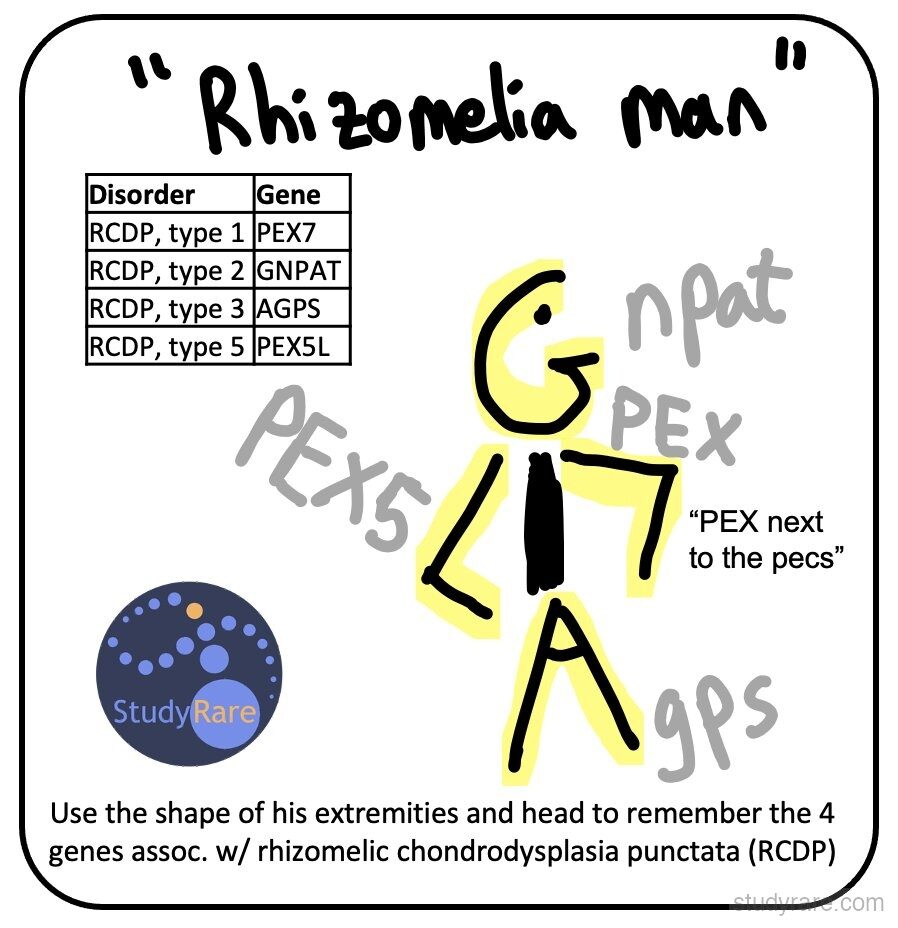
RCDP = Completely Defective Plasmalogen synthesis: the hallmark of RCDP is severely deficient plasmalogen levels (plasmalogens are important membrane phospholipids in the brain).
PEX7: PEX7 (the most common gene) aids in transport of peroxisomal matrix proteins. Rhizomelic = proximal limb shortening (rhizo- = root).
RCDP patients have "regular" (normal) peroxisomal labs except for a complete deficiency of plasmalogens, in contrast to Zellweger spectrum disorders where multiple peroxisomal markers are abnormal.
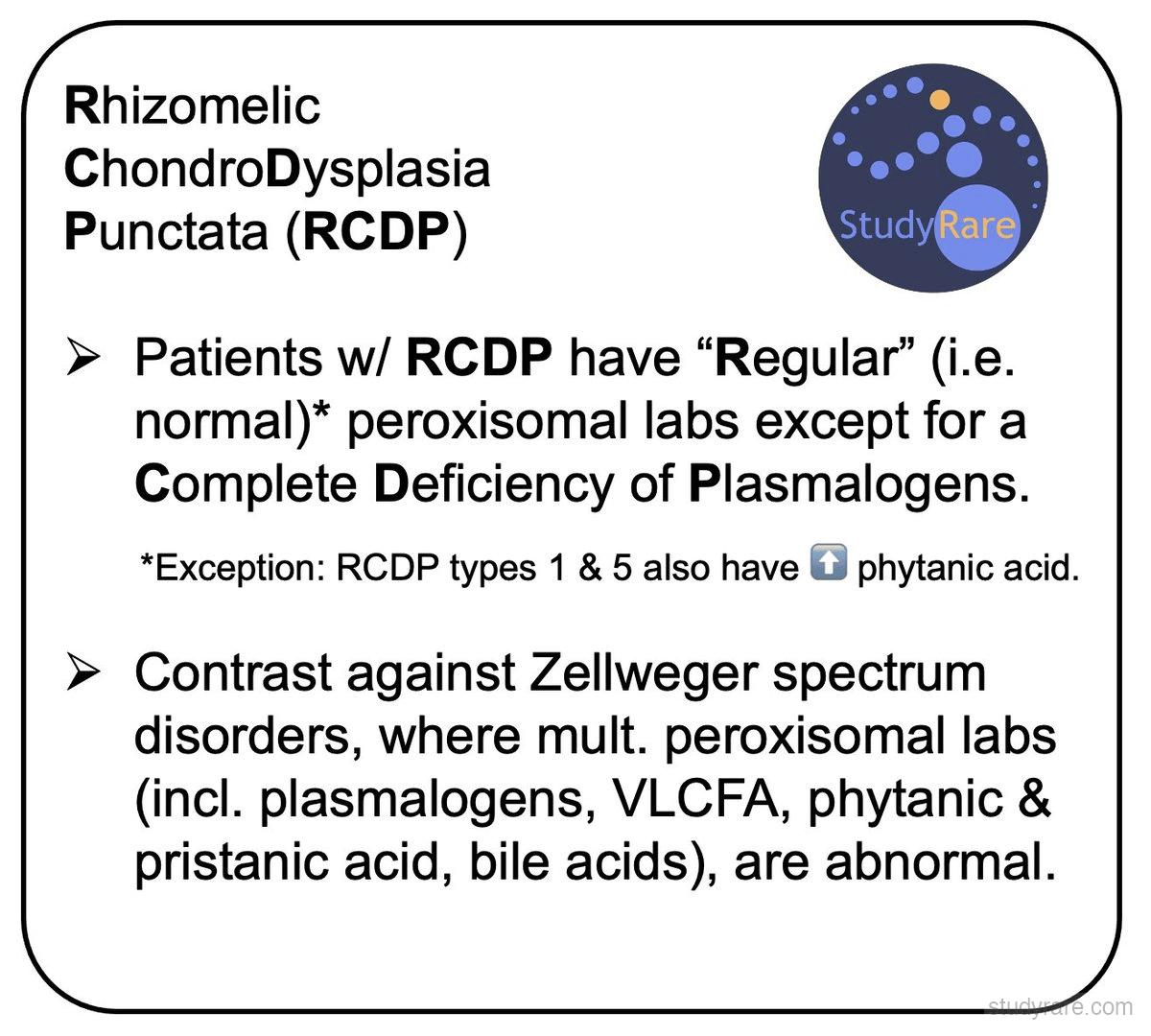
The "Rhizomelia Man" stick figure uses the shape of the extremities and head to encode the four genes associated with RCDP: PEX7, GNPAT, AGPS, and PEX5L ("PEX next to the pecs").