Very long-chain acyl-CoA dehydrogenase deficiency (VLCADD)
On ABGC's listListed on the ABGC Self-Study GuideLog in to starLast updated 4mo ago
A newborn presents with cardiomyopathy and hypoglycemia. Acylcarnitine profile shows elevated C14:1.
AR; ACADVL
- Three phenotypes:
- Severe: Cardiomyopathy, hepatopathy, hypoglycemia (neonatal)
- Moderate: Hypoketotic hypoglycemia (childhood)
- Mild: Myopathy, rhabdomyolysis (adult)
- On RUSP
- Newborn screening (acylcarnitine profile): elevated C14:1 (tetradecenoylcarnitine)
- During crisis: hypoketotic hypoglycemia; CK elevation with rhabdomyolysis in the myopathic form
- Confirmatory: ACADVL molecular testing and/or enzyme activity assay in fibroblasts/leukocytes
- Avoid fasting, MCT supplementation, carnitine (controversial)
NBS: C14:1 (tetradecenoylcarnitine): on newborn screening acylcarnitine profile, elevated C14:1 is the key marker for VLCADD. Compare with MCADD (C8) and LCHADD (C16-OH).
"Very Large Colon ADDs diagnostic value": the colon (":") in C14**:1** is VLCAD's special add-on. LCHAD and VLCAD both have "special" add-ons to their fatty acid biomarkers: LCHAD has "-OH" (C14-OH, C16-OH, C18-OH) and VLCAD has ":" (C14:1).
No retinopathy in VLCADD: unlike LCHADD, VLCADD does not cause retinopathy or peripheral neuropathy. Think "eye chart" for LCHAD (has retinopathy) versus VLCAD (does not).
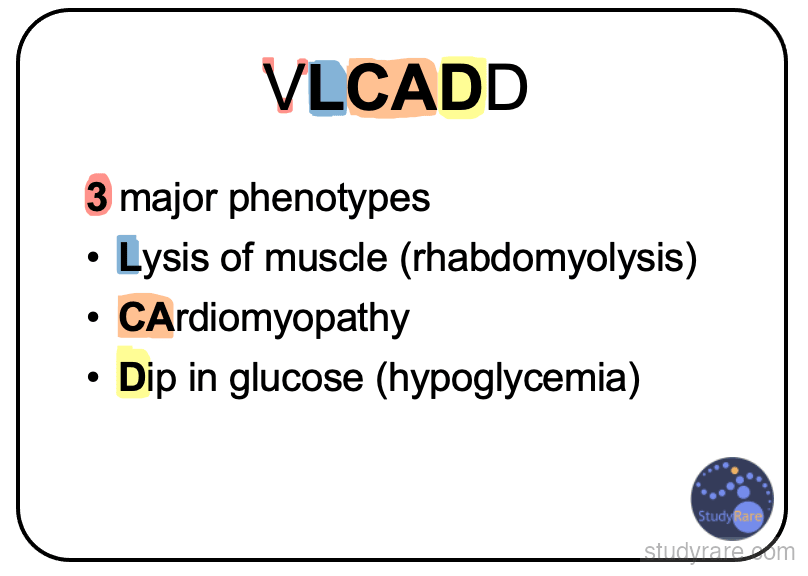
The "LCD" in VLCADD encodes the 3 major phenotypes: Lysis of muscle (rhabdomyolysis), CArdiomyopathy, and Dip in glucose (hypoglycemia).