Andersen-Tawil syndrome (ATS/LQT7)
Log in to starLast updated 1d ago
A 12-year-old girl presents with episodes of muscle weakness and cardiac palpitations. ECG shows a prolonged QT interval and prominent U waves. Physical exam reveals micrognathia, hypertelorism, low-set ears, clinodactyly, and short stature.
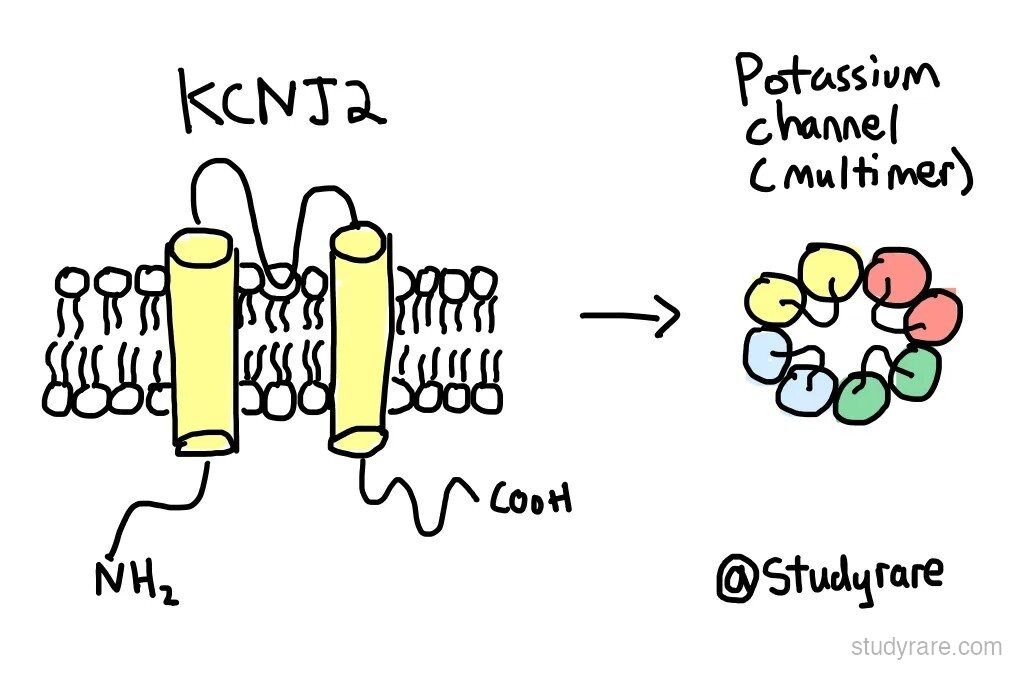
AD; KCNJ2 (inward rectifier potassium channel Kir2.1)
- ~60% have KCNJ2 pathogenic variants
- High phenotypic variability, even within families
- Also classified as Long QT syndrome type 7 (LQT7)
The clinical triad:
- Periodic paralysis: episodic muscle weakness (hypo- or hyperkalemic)
- Cardiac arrhythmias: prolonged QT, prominent U waves, ventricular arrhythmias (bidirectional VT)
- Distinctive facial and skeletal features: micrognathia, hypertelorism, low-set ears, clinodactyly, short stature, broad forehead, scoliosis
- Generally milder cardiac phenotype than other LQTS subtypes
- Bidirectional VT (also seen in CPVT, an important differential)
- KCNJ2 gene testing
- ECG: prolonged QTc, prominent U waves
- Potassium levels during episodes of weakness
- Evaluate for characteristic dysmorphic features
- Avoid triggers for periodic paralysis (strenuous exercise, carbohydrate-rich meals)
- Acetazolamide for periodic paralysis episodes
- Beta-blockers or flecainide for arrhythmias
- ICD generally not first-line (arrhythmias are often self-limited)
Andersen-Tawil triad ("Heart, Muscle, Face"): Cardiac arrhythmias + periodic paralysis + distinctive facies. The only channelopathy with dysmorphic features.
"KCNJ2 = Potassium ChaNnel that affects 2 organs + face": the potassium channel dysfunction explains both the cardiac (arrhythmia) and skeletal muscle (paralysis) features.
Bidirectional VT differential: Andersen-Tawil (KCNJ2) vs CPVT (RYR2). Both cause bidirectional VT, but only ATS has the dysmorphic features.
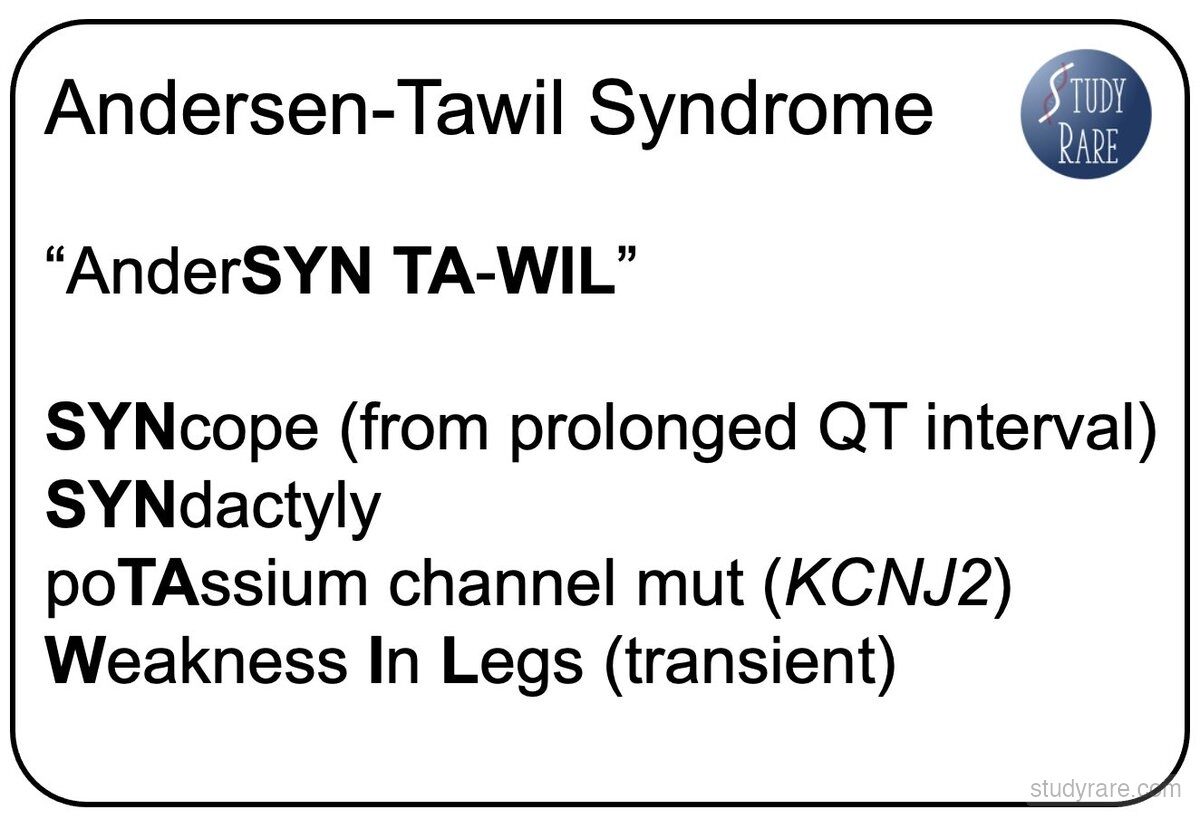
The name "AnderSYN TA-WIL" encodes the clinical triad: SYNcope, SYNdactyly, poTAssium channel (KCNJ2), and Weakness In Legs.
KCNJ2 encodes an inward rectifier potassium channel subunit that assembles into a multimeric pore complex.