Log in to add personal notes on this page.
A 35-year-old man from Southeast Asia is resuscitated after cardiac arrest during sleep. ECG shows characteristic coved ST elevation in V1-V3. Family history reveals a brother who died suddenly in his sleep.
AD (reduced penetrance); SCN5A (~20%)
- Most cases have no identified gene
- Type 1 ECG pattern: Coved ST elevation ≥2 mm in V1-V3
- Syncope, VF, sudden death
- Triggers: fever, certain drugs, sleep
- More common in Southeast Asian males
- Type 1 (coved) ST elevation ≥2 mm in ≥1 right precordial lead (V1-V2) is diagnostic, spontaneous or drug-induced
- Sodium-channel-blocker provocation (ajmaline, flecainide, or procainamide) unmasks the type 1 pattern when baseline ECG is non-diagnostic
- High right precordial lead placement (2nd-3rd intercostal space) increases sensitivity
- SCN5A genetic testing in confirmed cases supports cascade screening of first-degree relatives; loss-of-function distinguishes Brugada from the gain-of-function seen in Long QT type 3
- Implantable cardioverter-defibrillator (ICD) for survivors of cardiac arrest or those with spontaneous type 1 pattern plus syncope/documented VF
- Aggressive treatment of fever with antipyretics (fever unmasks the phenotype)
- Avoid sodium-channel-blocking drugs and other agents listed on BrugadaDrugs.org
- Quinidine or catheter ablation of the RV outflow tract epicardium for recurrent arrhythmia/electrical storm
Gene "BRiny": Brugada is due to LOF in SCN5A (sodium channel). "BRiny" = salty = sodium channel
"aBRUpt death in BRUgada": Sudden cardiac death is the hallmark danger
LOF mnemonic ("'Brood'gada"): If you are brooding, your mood is low --> loss of function. SCN5A GOF = Long QT; SCN5A LOF = Brugada
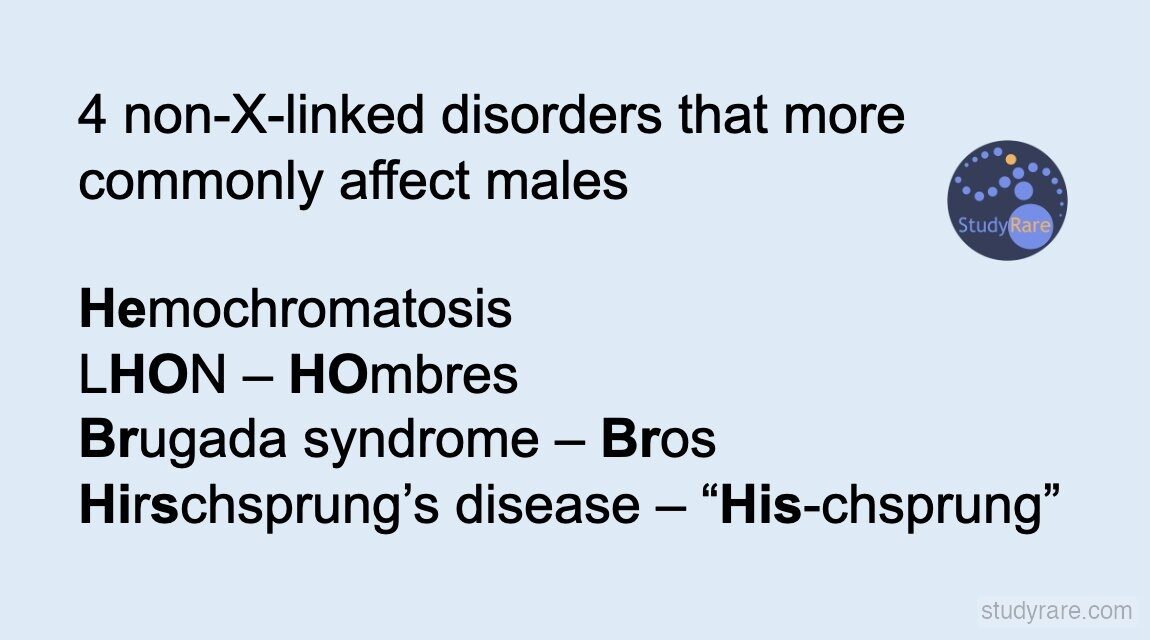
Brugada syndrome is one of four non-X-linked disorders that more commonly affect males, remembered as "He, HON, Bros, His."