Last updated 4mo ago
Log in to add personal notes on this page.
A 10-year-old obese boy with rod-cone dystrophy is noted to have postaxial polydactyly (surgically removed at birth), learning difficulties, and small genitalia. Ultrasound shows renal structural anomalies.
AR; ciliopathy (>20 BBS genes)
- Rod-cone dystrophy (retinitis pigmentosa-like) - progressive blindness
- Postaxial polydactyly
- Obesity (central, childhood onset)
- Renal anomalies (structural, chronic kidney disease)
- Learning difficulties
- Hypogonadism
- Clinical diagnosis using established criteria (4 primary features, or 3 primary plus 2 secondary features)
- Multigene panel or exome sequencing across the >20 BBS genes confirms the diagnosis
- Baseline workup: ophthalmology (electroretinogram for rod-cone dystrophy), renal ultrasound and function, and metabolic/endocrine evaluation
- Carrier testing of relatives and reproductive options offered once biallelic variants are identified (autosomal recessive)
- Surveillance: serial ophthalmology, renal function and imaging, blood pressure, and metabolic monitoring for diabetes/dyslipidemia
- Weight management (diet, activity, behavioral support); setmelanotide is an option for BBS-associated obesity and hyperphagia
- Manage chronic kidney disease, with referral for renal replacement or transplant when needed
- Developmental and educational support; treat hypogonadism and other endocrine deficits as indicated
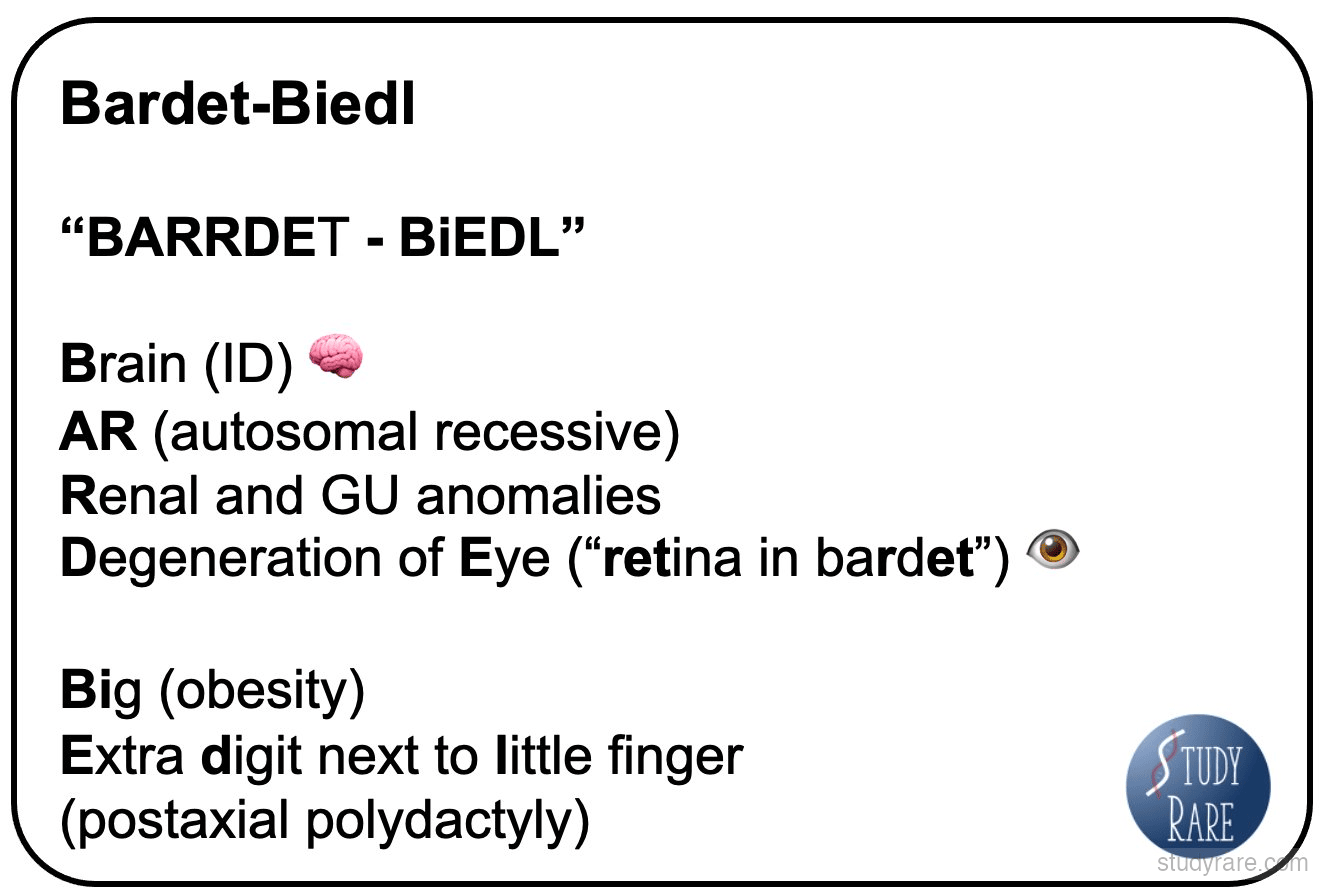
BARDE BIEDL
-
Brain (ID)
-
AR (autosomal recessive)
-
Renal and GU anomalies
-
Degeneration of Eye
-
BIg (truncal obesity)
-
Extra Digit next to Little finger (postaxial polydactyly)