
Last updated 4mo ago
Log in to add personal notes on this page.
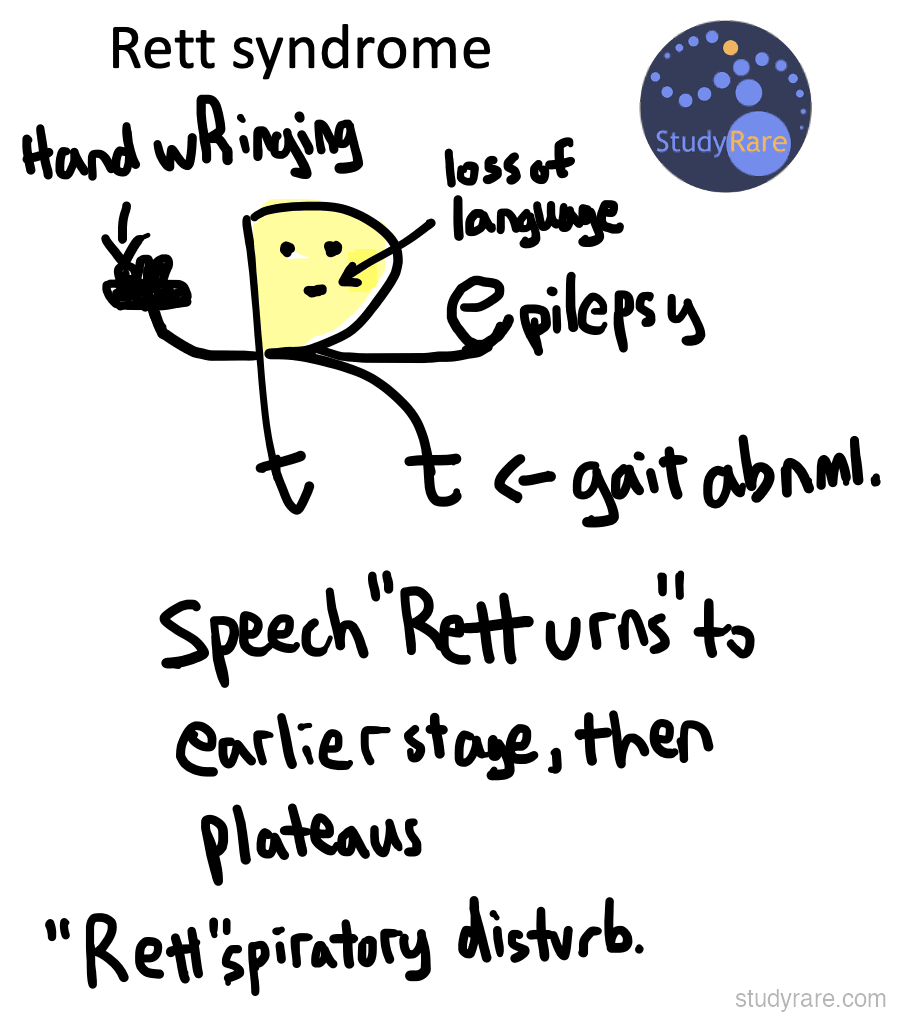
An 18-month-old girl who had been developing normally begins to lose purposeful hand skills and develops stereotypic hand-wringing movements. She loses language and develops breathing abnormalities.
XLD; MECP2 gene (Xq28)
- Almost all cases de novo
- Lethal in most males
- Normal development until 6-18 months, then regression
- Loss of purposeful hand use → stereotypic hand movements (wringing, washing)
- Loss of spoken language
- Gait abnormalities, acquired microcephaly
- Breathing abnormalities (hyperventilation, breath-holding)
- Seizures (>80%)
- Clinical diagnosis in girls with a period of normal early development followed by regression, loss of purposeful hand use, stereotypic hand movements, and acquired microcephaly
- Confirm with molecular testing of MECP2; deletion/duplication analysis if sequencing is negative
- Consider CDKL5 and FOXG1 in atypical or early-onset (early-seizure or congenital) presentations
- Almost always de novo; recurrence risk is low but counsel on rare maternal gonadal mosaicism
- Multidisciplinary supportive care: physical, occupational, and speech/communication therapy
- Antiseizure medications for epilepsy; EEG as indicated
- Cardiology surveillance with ECG for QT prolongation; monitor and manage scoliosis and feeding/GI issues
- Trofinetide is an approved disease-targeted therapy; otherwise care is symptom-directed
"ReTT": wRinging of hands, Teeter-Totter (broad-based gait), issues with Talking/speech