Last updated 4mo ago
A 35-year-old has a heart attack. His LDL cholesterol is 350 mg/dL. He has tendon xanthomas on his Achilles tendons and a corneal arcus. His father died of MI at age 42.
AD; most commonly LDLR (LDL receptor)
- Also APOB, PCSK9 (gain-of-function)
- Homozygotes: severe, early childhood cardiovascular disease
- Markedly elevated LDL cholesterol from birth
- Premature atherosclerotic cardiovascular disease
- Tendon xanthomas (Achilles, extensor tendons)
- Corneal arcus (before age 45)
- Xanthelasma
Heterozygotes: LDL 190-400 mg/dL, CAD onset 30s-50s Homozygotes: LDL >500 mg/dL, CAD in childhood/teens
- Clinical criteria combine markedly elevated LDL, tendon xanthomas, and family history of premature CAD (Dutch Lipid Clinic Network or Simon Broome criteria)
- Untreated LDL roughly 190-400 mg/dL (heterozygotes) or >500 mg/dL (homozygotes), after excluding secondary causes
- Molecular confirmation: pathogenic variant in LDLR, APOB, or PCSK9; cascade screening of first-degree relatives is indicated
- High-intensity statins, PCSK9 inhibitors, lifestyle; LDL apheresis for homozygotes
Type IIa Familial Hyperlipidemia: FH is classified as Fredrickson Type IIa. The "II" can remind you of the two key physical findings: tendon xanthomas (especially Achilles) and corneal arcus before age 45.
LDL receptor deficiency (AD): the most common cause. Homozygotes have virtually no functional LDL receptors, causing LDL >500 mg/dL and cardiovascular disease in childhood. PCSK9 gain-of-function variants also cause FH by increasing degradation of LDL receptors.
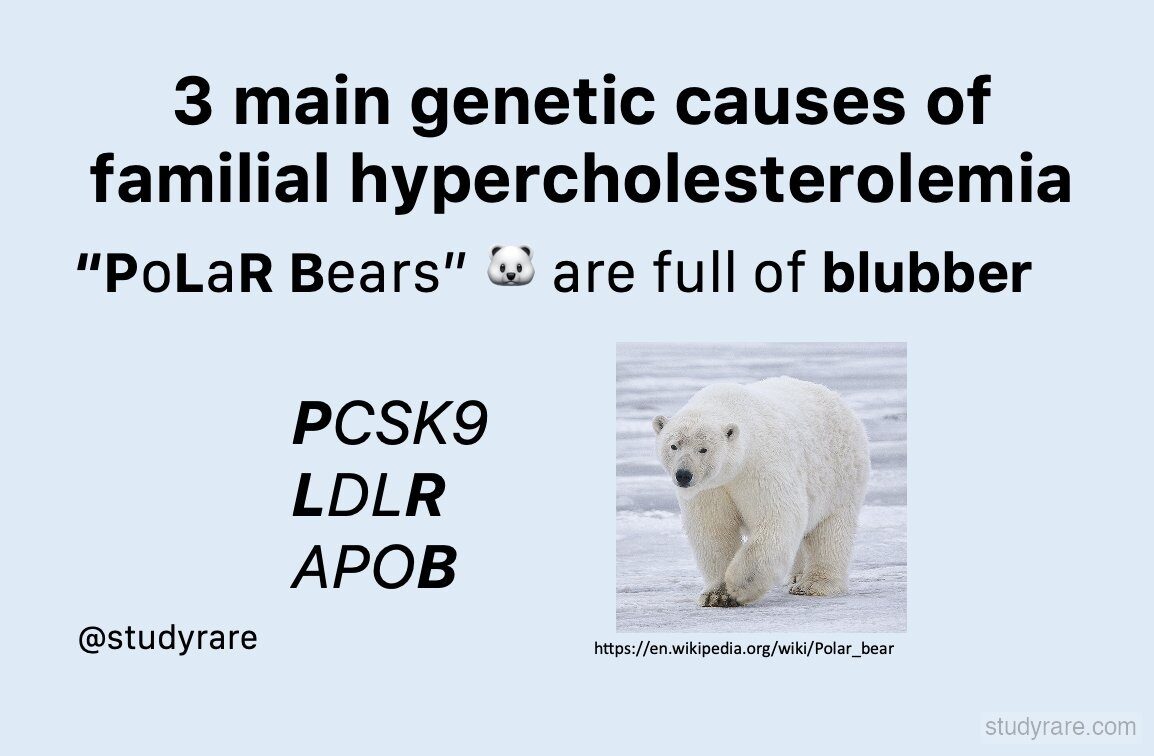
The three main genetic causes of FH are remembered with "PoLaR Bears are full of blubber": PCSK9, LDLR, and APOB.