Familial thoracic aortic aneurysm and dissection
Log in to starLast updated 4mo ago
Log in to add personal notes on this page.
A 45-year-old man with no syndromic features has aortic root dilation. Family history reveals multiple relatives with aortic aneurysms or sudden death.
AD; ~20% of thoracic aortic disease is familial
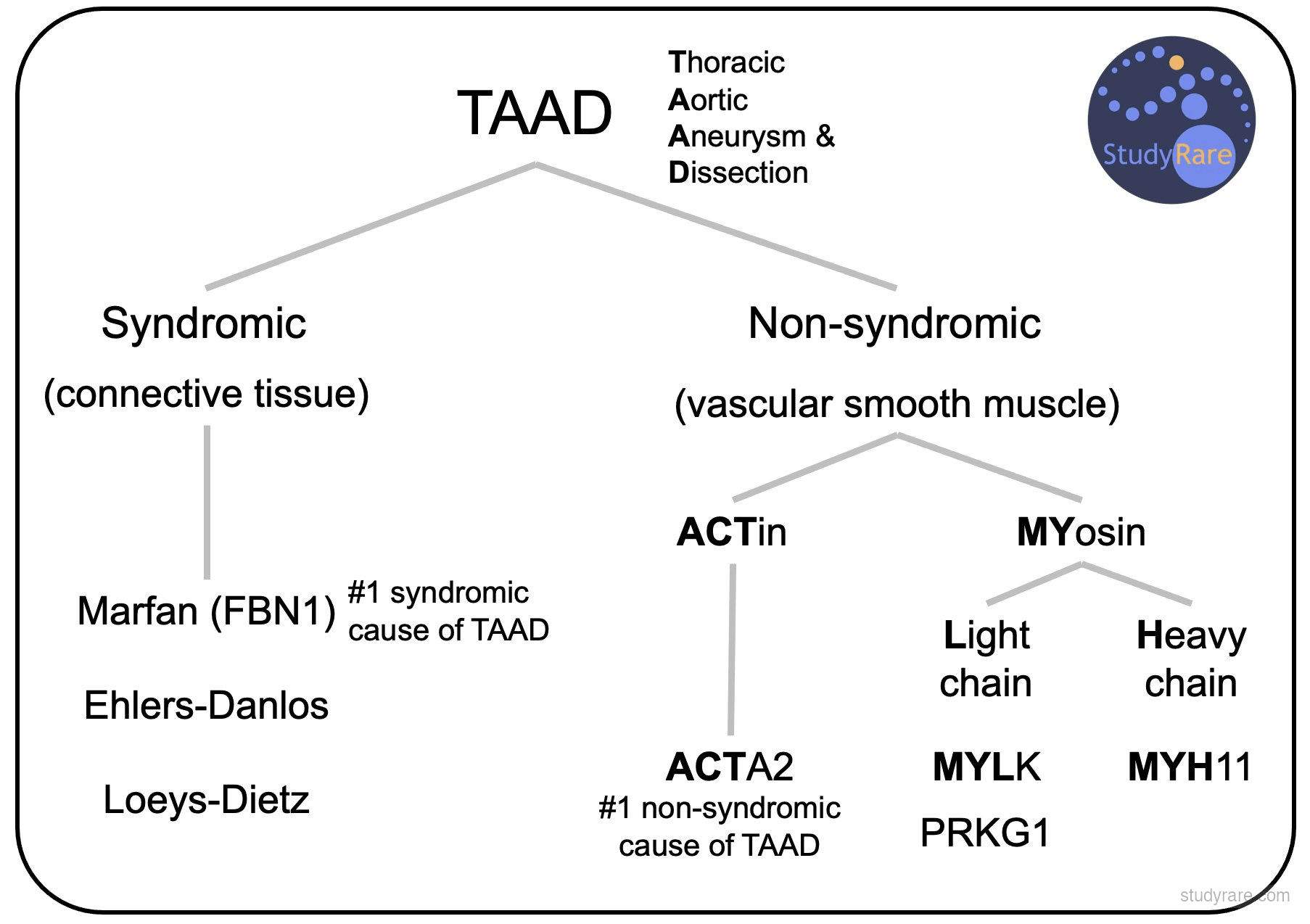
- Genes: ACTA2 (most common), MYH11, MYLK, PRKG1, SMAD3, TGFBR1/2
- Non-syndromic aortic aneurysm/dissection
- Variable penetrance
- May have livedo reticularis, iris flocculi (ACTA2)
- Patent ductus arteriosus (MYH11)
- Aortic imaging (transthoracic echo, then CT or MR angiography) demonstrating thoracic aortic aneurysm or dissection, with a family history of aortic disease/sudden death
- Gene panel testing (ACTA2, MYH11, MYLK, PRKG1, SMAD3, TGFBR1/2, FBN1); also evaluates for syndromic aortopathies such as Marfan and Loeys-Dietz
- Cascade screening with aortic imaging in first-degree relatives; baseline imaging even when genetic cause is unidentified
- Serial aortic imaging surveillance; interval set by aortic diameter, growth rate, and gene (more aggressive for TGFBR1/2, SMAD3, ACTA2)
- Blood-pressure control with beta-blockers and/or angiotensin receptor blockers to reduce aortic wall stress
- Prophylactic aortic root/ascending aortic surgery at diameter thresholds, lowered for high-risk genotypes and rapid growth
- Avoid isometric/heavy resistance exercise and competitive/contact sports
Syndromic causes, "Thor is MALE": The 4 main syndromic causes of thoracic aortic disease are Marfan, ACTA2, Loeys-Dietz, and vascular EDS
This diagram organizes the causes of TAAD into syndromic (connective tissue) and non-syndromic (vascular smooth muscle) categories.