
GLI3-related Pallister-Hall syndrome
Log in to starLast updated 4mo ago
A newborn has central polydactyly (insertional), imperforate anus, and a bifid epiglottis. MRI reveals a hypothalamic hamartoma.
AD; GLI3 gene
- Hypothalamic hamartoma
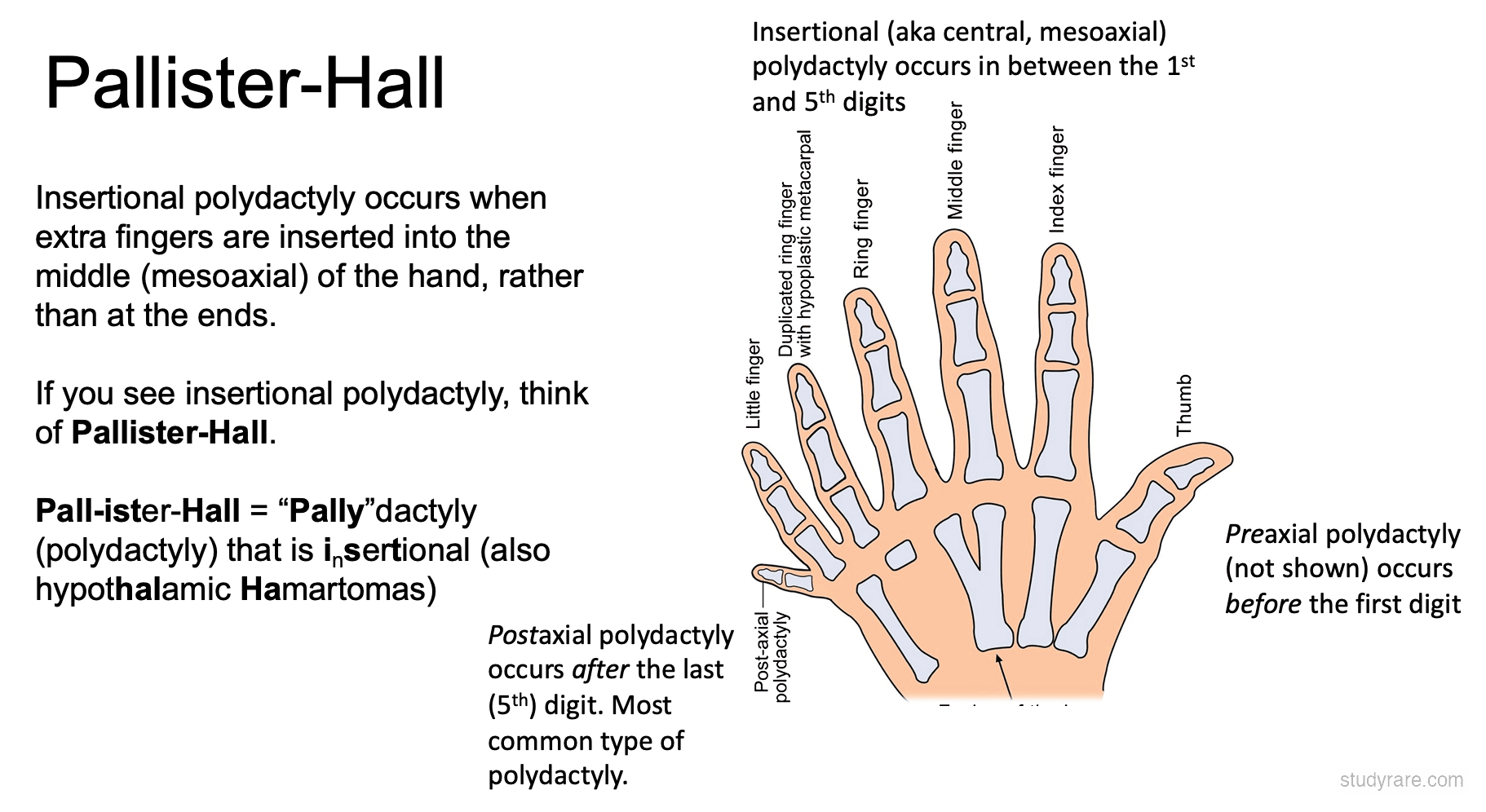
- Central/insertional polydactyly
- Bifid epiglottis, laryngeal cleft
- Imperforate anus
- Allelic with Greig cephalopolysyndactyly (different GLI3 variants)
- Clinical recognition: hypothalamic hamartoma plus central (mesoaxial/insertional) polydactyly are the core features
- Brain MRI to define the hypothalamic hamartoma; evaluate for bifid epiglottis/laryngeal cleft and imperforate anus
- Confirm with molecular testing of GLI3; truncating variants in the middle third of the gene are typical (contrast with Greig syndrome)
- Endocrinology evaluation for hypopituitarism and adrenal insufficiency (panhypopituitarism can be life-threatening in the newborn)
- Surgical management of imperforate anus, laryngeal cleft/airway anomalies, and symptomatic polydactyly
- Antiseizure treatment for gelastic and other seizures; hamartoma surgery reserved for refractory cases; developmental support and surveillance
"GLId3 (glide) the Palm of your Hand": GLI3 causes both Greig and Pallister-Hall. Think "Hand GLIding" for P-Hall: polydactyly (hand) and GLI3.
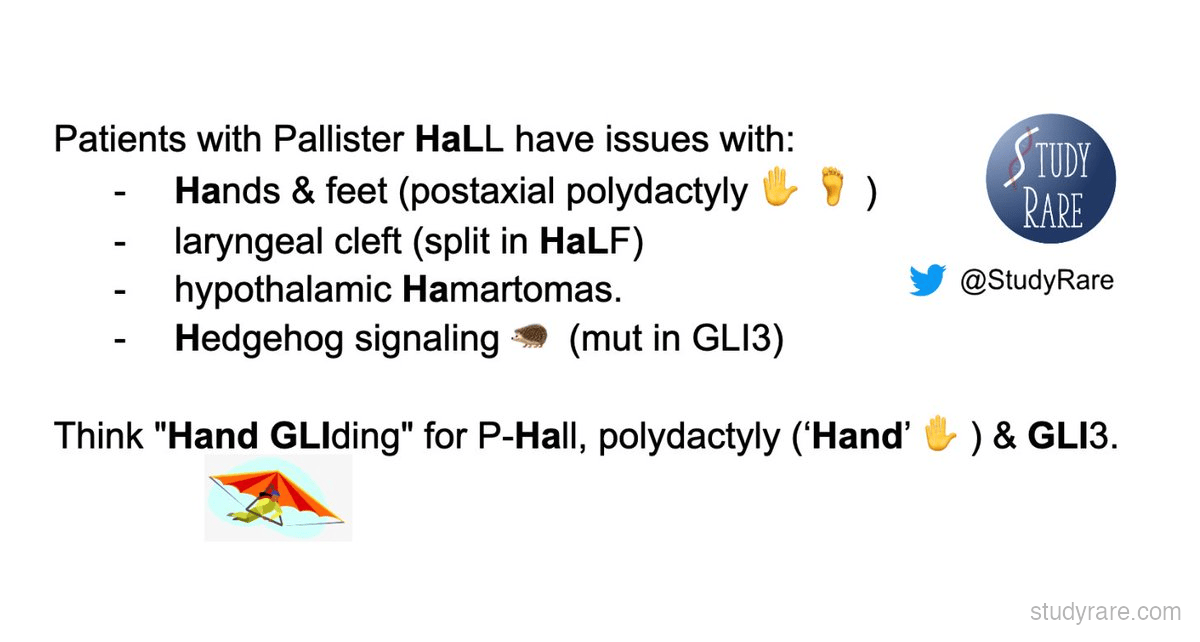
"Pallister-Hallllll": All of the extra "L"s are like the extra digits on the hand. The classic finding is central/insertional (mesoaxial) polydactyly, with the extra digit inserted between the existing digits rather than at the margins.
"Deck the HHHALLs": Hormone issues (adrenal insufficiency), Anus (imperforate), Laryngeal cleft, Little finger (extra, polydactyly), Hypothalamic hamartoma
"GeLastIc seizure in GLI3": Hypothalamic hamartomas in Pallister-Hall can cause gelastic (laughing) seizures.