
Blood and Immune Disorders
Overview
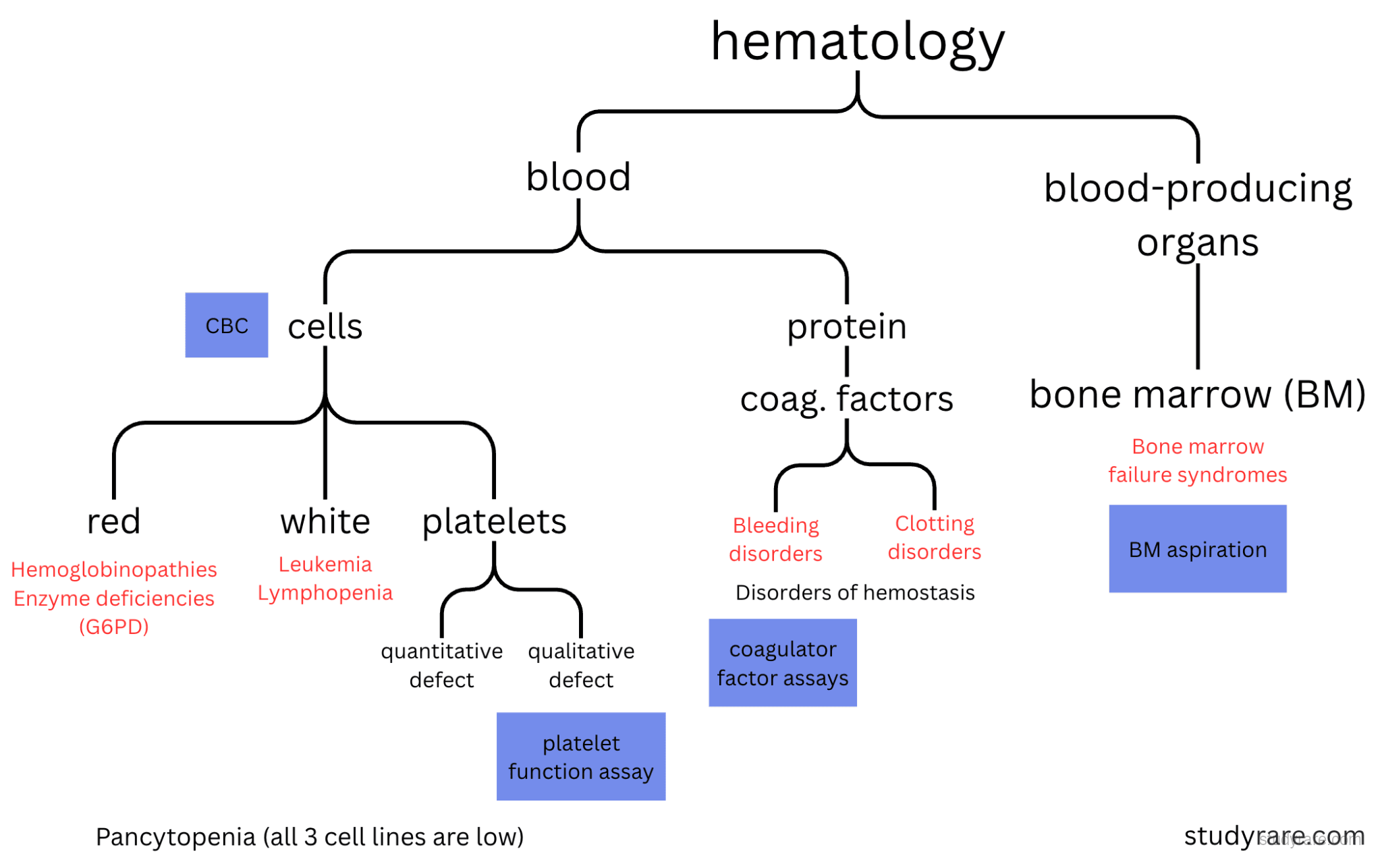
Hematologic genetic disorders include hemoglobinopathies, bone marrow failure syndromes, bleeding disorders, clotting disorders, and primary immunodeficiencies.
Hemoglobinopathies
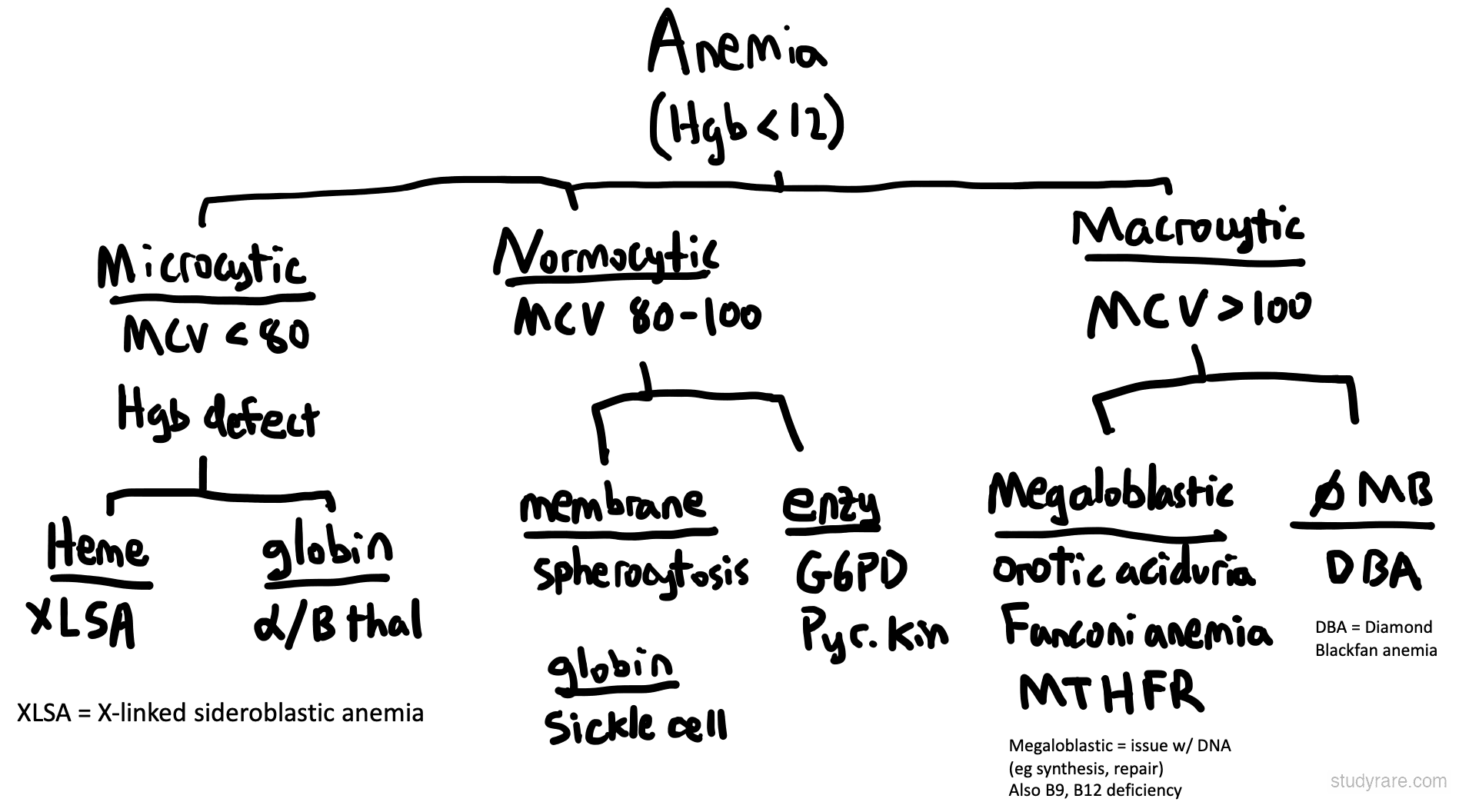
Hemoglobinopathies are structural (sickle cell) or quantitative (thalassemias) defects in globin chains. Sickle cell disease causes vaso-occlusive crises and functional asplenia, so penicillin prophylaxis is essential. For alpha-thalassemia, the cis vs. trans configuration of the deletions matters (Southeast Asian = cis = Bart's hydrops risk; African = trans = safer). Beta-thalassemia major presents after 6 months when fetal hemoglobin declines.
Hemolytic anemias
Hemolytic anemias cause red cell destruction. G6PD deficiency is the most common enzyme deficiency worldwide (X-linked). Episodic hemolysis is triggered by oxidative stress (fava beans, sulfonamides, infections). The smear shows bite cells and Heinz bodies during a crisis. It's protective against malaria, explaining its geographic distribution.
Bone marrow failure syndromes
These syndromes cause progressive cytopenias and cancer predisposition. Fanconi anemia (DNA crosslink repair, radial ray defects, chromosome breakage test) has high malignancy risk including MDS, AML, and squamous cell carcinomas. Dyskeratosis congenita (telomere biology) has the triad of nail dystrophy, oral leukoplakia, and skin pigmentation. Telomere length testing is diagnostic.
Bleeding disorders
Bleeding disorders are classified by where patients bleed: deep bleeding (hemarthroses, muscle hematomas) suggests clotting factor deficiency (hemophilia), while mucocutaneous bleeding (epistaxis, menorrhagia) suggests platelet or VWF problems. Hemophilia A (factor VIII) and B (factor IX) are X-linked and clinically identical; distinguish them by factor levels. Von Willebrand disease is the most common inherited bleeding disorder and usually mild (type 1).
Clotting disorders
Inherited thrombophilias increase venous thromboembolism risk. Factor V Leiden (activated protein C resistance) is the most common inherited thrombophilia in Caucasians (~5% carrier frequency). Prothrombin G20210A is second most common. Risk is multiplicative with other factors (OCPs, pregnancy, immobilization). These primarily affect VENOUS clots; arterial clots have different risk factors.
DNA repair disorders
DNA repair disorders cause genomic instability, leading to both neurodegeneration and cancer predisposition. Ataxia-telangiectasia (ATM, progressive ataxia, radiation sensitivity, elevated AFP) and Fanconi anemia (crosslink repair, radial ray defects, chromosome breakage test) are the clinically central ones to know. Bloom syndrome (BLM, short stature, sun-sensitive rash, sister chromatid exchanges) and xeroderma pigmentosum (nucleotide excision repair, UV sensitivity, skin cancers) are also important. These conditions share the theme of cancer surveillance and avoiding genotoxic exposures (radiation for A-T, sunlight for XP).
Immunodeficiencies
Primary immunodeficiencies are classified by which immune components are affected. SCID is a pediatric emergency; affected infants die without HSCT. It's on newborn screening (TREC). The lymphocyte phenotypes distinguish the subtypes: X-linked (T-B+NK-), ADA (T-B-NK-), RAG (T-B-NK+). Wiskott-Aldrich (small platelets + eczema + immunodeficiency), CGD (catalase-positive infections, abnormal DHR test), and XLA (absent B cells) are other key conditions.
Autoinflammatory disorders
Distinct from primary immunodeficiencies and from classical autoimmune disease, these are disorders of the innate immune system, where dysregulated inflammasome activation produces recurrent unprovoked fever and serositis without infection or autoantibodies. Familial Mediterranean fever (FMF, MEFV) is the prototype: short attacks (1-3 days) of fever with sterile peritonitis/pleuritis/arthritis and erysipelas-like rash, classically in patients of Sephardic Jewish, Armenian, Turkish, or Arab background. Lifelong colchicine is the standard of care: it both reduces attacks and prevents the long-term complication of AA (secondary) amyloidosis, which drives morbidity in untreated disease. Differentiate FMF from the other periodic fever syndromes by attack length and triggers: TRAPS (TNFRSF1A, AD, attacks 1-3 weeks), HIDS/MKD (MVK, AR, attacks every 4-6 weeks with cervical lymphadenopathy), CAPS (NLRP3, AD, cold-induced urticaria + hearing loss), and PFAPA (sporadic, pediatric, responds dramatically to a single dose of steroid).
Summary Table
| Disorder | Gene | Inheritance | Cardinal Features |
|---|---|---|---|
| Sickle cell | HBB | AR | Vaso-occlusive crises, functional asplenia, on RUSP |
| Beta-thalassemia | HBB | AR | Severe anemia, transfusion-dependent, iron overload |
| Alpha-thalassemia | HBA1/2 | AR | Bart's hydrops (--/--), HbH disease |
| G6PD deficiency | G6PD | XLR | Episodic hemolysis, oxidant triggers |
| Fanconi anemia | FANCA, others | AR | Radial ray defects, bone marrow failure, cancer risk |
| Dyskeratosis congenita | Multiple | Variable | Nail dystrophy, leukoplakia, short telomeres |
| Ataxia-telangiectasia | ATM | AR | Progressive ataxia, conjunctival telangiectasias, radiation sensitivity, elevated AFP |
| Hemophilia A | F8 | XLR | Factor VIII deficiency, hemarthroses |
| Hemophilia B | F9 | XLR | Factor IX deficiency |
| VWD | VWF | AD/AR | Mucocutaneous bleeding, most common |
| Factor V Leiden | F5 | AD | APC resistance, VTE risk |
| Prothrombin G20210A | F2 | AD | 2nd most common inherited thrombophilia, VTE risk |
| SCID | Multiple | XLR/AR | Severe infections, absent T cells, on RUSP |
| Wiskott-Aldrich | WAS | XLR | Eczema, small platelets, immunodeficiency |
| CGD | CYBB, others | XLR/AR | Catalase+ infections, granulomas |
| X-linked agammaglobulinemia | BTK | XLR | Absent B cells, recurrent bacterial infections, small tonsils |
| Familial Mediterranean fever | MEFV | AR | Recurrent 1-3 day fever, serositis, colchicine prevents AA amyloidosis |